You can judge this (mythicist) book by its AI cover
Christ Before Jesus has the presentation of a revelation. Its historical argument deserves considerably less reverence.
6 sections0 citations3 figures
Christ Before Jesus: A Critical Review · Part 1: The promised revolution
Review disclosure: I purchased the paperback edition of Christ Before Jesus from Amazon.
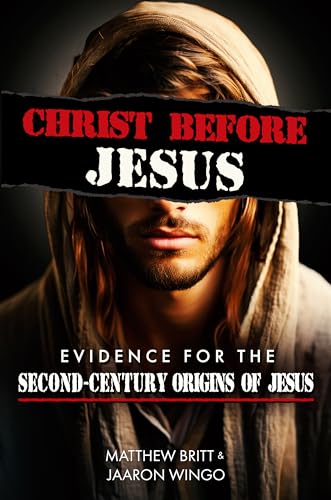
A hooded Jesus occupies the cover of Christ Before Jesus, with the title laid across his eyes. Wonderfully economical: before the argument has begun, a declaration has already made Jesus disappear.
Give the illustration to a Renaissance master and the historical burden would remain exactly where it was. What interests me is the confidence of the packaging. The book appears to arrive bearing news that centuries of scholarship have somehow failed to notice.
Matthew Britt and Jaaron Wingo’s public description promises “Just logic and math.” A pleasantly austere menu. Let us begin with the logic.
Disbelief is the easy part
The Gospels disagree. Their authors arrange material to make theological points. Some stories are difficult to reconcile; some traditions are difficult to date. Ancient writers could exaggerate, borrow, invent and attribute their work to somebody more distinguished.
All fair subjects for criticism. None is a discovery that historians have been patiently awaiting two modern authors to announce.
The difficulty comes when we ask what follows. Inventing a story about Jesus need not mean inventing Jesus, any more than falsely attributing a letter makes its supposed author imaginary. A community can embroider its beginnings without manufacturing them from nothing.
These distinctions are not concessions to Christianity. They are what prevent criticism from becoming a collection of suspicious gestures.
The subtitle of Christ Before Jesus promises evidence for the second-century origins of Jesus, a much larger claim than the unreliability of Christian storytelling. The authors have to establish that history. Finding difficulties in the familiar account does not establish its replacement.
The old explanation does not lose by default because the new one has arrived looking pleased with itself.
Suspicion is not a method
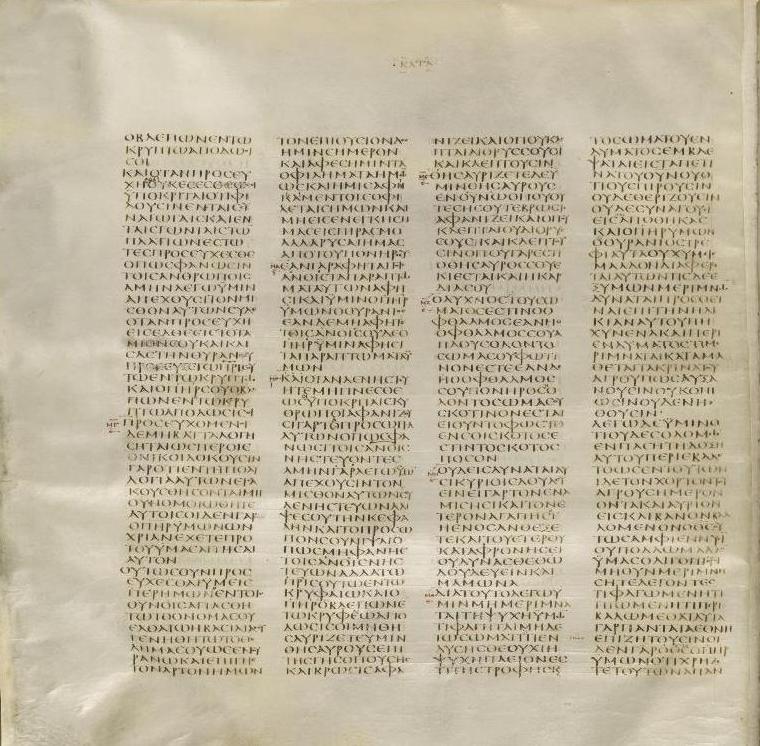
There is a cheap form of scepticism in which every difficulty becomes evidence for the sceptic’s preferred conclusion.
A source is late: invention. A source has been edited: invention. Two accounts disagree: invention. Two accounts agree: somebody copied somebody, which apparently brings us back to invention.
An admirably efficient procedure, sparing the investigator the inconvenience of discovering anything unexpected.
But each observation raises a different historical question. A late source may preserve earlier information. Editing may alter an existing account rather than create its subject. Agreement can reflect copying, shared tradition or independent knowledge. Disagreement may concern the details of something that happened.
None of those possibilities deserves automatic acceptance. Neither does wholesale fabrication.
An explanation earns its place by accounting for the evidence better than its competitors. Making a more sweeping accusation may simply leave you with more to prove.
The computer does not take responsibility
The authors emphasise the scale of their computer analysis. The scale may attract attention; it does not tell us whether the analysis answers the historical question.
A computer can perform an operation correctly while its user draws an unwarranted conclusion from the result. An interesting pattern can be quite real and still be misinterpreted.
Before we get anywhere near statistical settings, what does the result establish?
If an analysis identifies a relationship between texts, we still need to explain it. Shared authorship, imitation, common subject matter and editorial activity are different possibilities. Establishing a relationship between documents does not automatically establish that somebody they describe never existed.
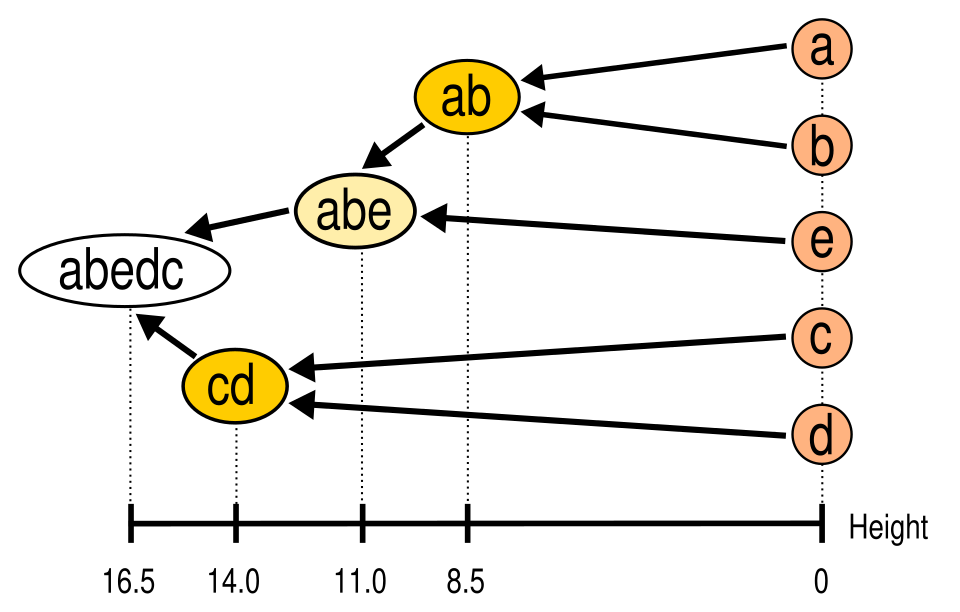
The authors must defend that extra inference. Their software cannot do it for them. A chart may make the argument easier to inspect, but it still has to make sense.
Where did the replacement history come from?
An account of invention needs more than a list of reasons to distrust the surviving sources.
Who produced the new story, and what earlier beliefs did it replace or transform? We need an account of how it circulated, with evidence connecting the stages. The reader should also be able to distinguish what survives in the sources from what the authors have reconstructed.
Those questions do not require a secret committee directing Christianity from a basement. Religions can develop without central coordination. Traditions can change without everyone involved recognising the change.
Calling the process development does not explain it. Nor must a historian recover every missing detail before proposing a hypothesis; ancient evidence rarely permits that luxury. The question is whether what survives gives us good reasons to prefer this account to another.
Ingenuity alone will not do. A possible history may still be improbable, however much we admire the effort of imagining it.
No theological rescue required
You can ask whether a real person lies behind the stories without believing that he walked on water. Distinguishing a forged letter from an invented person does not oblige you to defend every traditional attribution. Expecting a conclusion to follow from its premises hardly commits you to biblical inerrancy.
This is what makes the advertised opposition between inherited belief and modern analysis so unsatisfactory. Those are not our only choices.
Rejecting credulous apologetics leaves us free to find a revisionist argument unconvincing too. A welcome challenge to scholarly opinion may turn out to be inadequate. We need not applaud every departure from the mainstream as though intellectual independence were measured in miles travelled from the nearest university.
Outsiders are entitled to make arguments. Readers are entitled to ask whether they work.
The declaration across the face
I have no objection to the book’s irreverence. Irreverence is plentiful and inexpensive. I want to know whether the evidence advertised for Christ Before Jesus carries the considerable weight of its conclusion.
Repeating doubts about the sources does not resolve them, and the language of computation cannot turn a disputed historical inference into an observed fact.
The authors have advertised a revolution. What they have delivered is a collection of suspicions dressed as a discovery.
Until then, the cover supplies a rather good visual summary: put a sufficiently large assertion in front of Jesus and he becomes difficult to see.
The effect is clear enough. The explanation is what we are still owed.
Sources and further reading
Matthew Britt and Jaaron Wingo, the authors’ description of Christ Before Jesus.
For the wider historical question, see what scholars say about whether Jesus existed.
Figures
- Fig. 1 · Christ Before Jesus, reproduced for criticism and review. Cover source: Goodreads. goodreads.com
- Fig. 2 · A page of the fourth-century Codex Sinaiticus. Dating a surviving manuscript and dating the composition it preserves are different historical questions. Image: Wikimedia Commons, public domain. Wikimedia Commons
- Fig. 3 · An illustrative clustering diagram, not a result from Christ Before Jesus. Grouping similar items does not, by itself, explain why they are similar. Picture: Emmanuel Douzery, Wikimedia Commons, CC BY-SA 4.0. PNG rendering of the original SVG; diagram unchanged. Wikimedia Commons