Thallus
Almost complete agreement – Thallus is a third-hand fragment that no careful scholar leans on. The disagreement is about what a bad apologetic argument proves, which is nothing in either direction.
Responding to mythicism.web.app/thallus
This response is short because the source page is largely right. It says what critical scholarship has said for a century.
"We have no evidence Thallus wrote anything about Jesus"
Mythicist claim: The only information we have on Thallus comes from Christian apologetic sources. Syncellus (9th century) quotes Julius Africanus (3rd century), who references Thallus's Histories. Africanus doesn't quote Thallus directly, there's no evidence Thallus wrote about the passion, and we don't have the context.
Correct on every point. The chain is: Thallus (unknown date, perhaps mid-first or second century) → Julius Africanus (c. 221) → George Syncellus (c. 810). What survives is one sentence of Africanus: "Thallus, in the third book of his histories, explains away this darkness as an eclipse of the sun — unreasonably, as it seems to me." We do not know what Thallus actually wrote, whether he mentioned Jesus or Judaea at all, or whether he was even responding to Christian claims rather than simply recording an eclipse that Africanus later connected to the crucifixion himself.
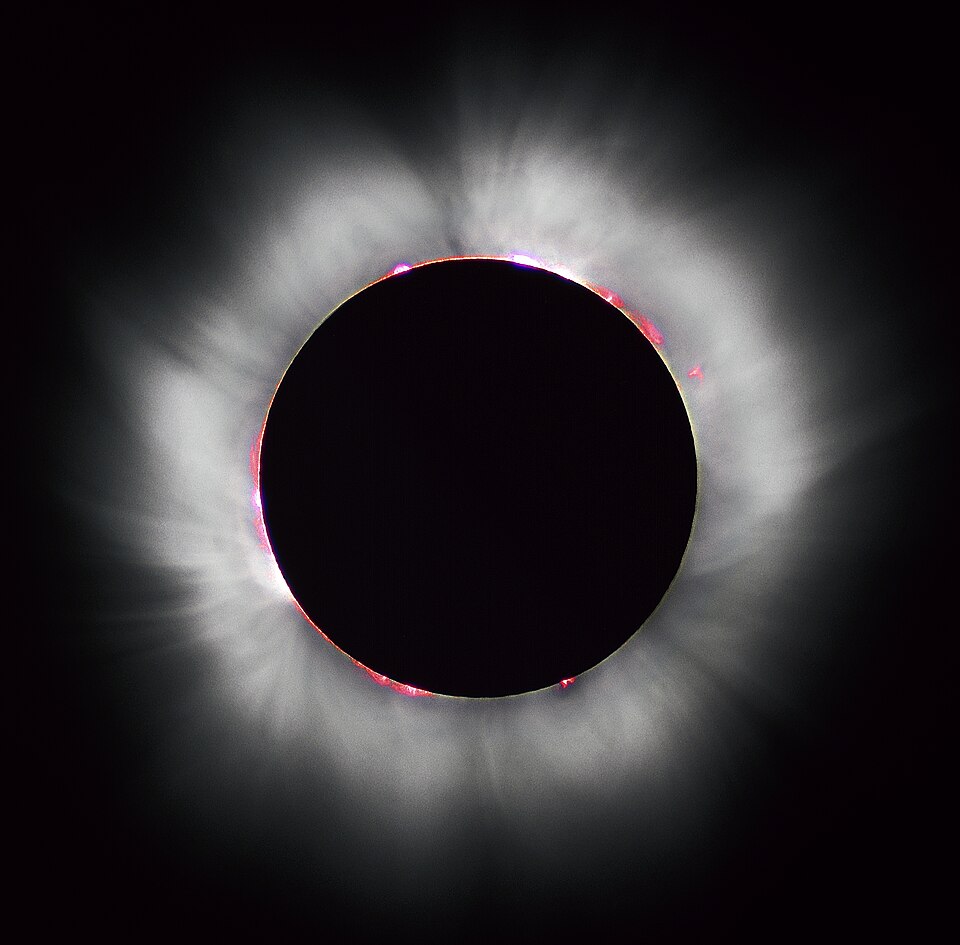
The candidate event usually discussed is the solar eclipse of 24 November 29 CE, visible in the eastern Mediterranean – a real astronomical event with no necessary connection to the crucifixion, which occurred at Passover, when a solar eclipse is impossible. Africanus's own objection – the site is right about this too – is that a solar eclipse cannot occur at the full moon; he wanted the darkness to be miraculous, not natural.
Because of exactly this chain of unknowns, careful scholarship does not use Thallus as evidence for Jesus. Robert Van Voorst's standard survey of the classical evidence concludes the Thallus fragment is too uncertain to bear weight; Richard Carrier – from the other side of this debate – has argued in a peer-reviewed article that Thallus probably did not mention Jesus at all, and may even belong to a later century. On this rare point, the apologetic-adjacent and mythicist literatures agree with each other and with this site: Thallus proves nothing.
What follows from this – and what doesn't
Mythicist claim (page description): Thallus mentions a solar eclipse that would have been impossible to observe in Jerusalem during Passover.
One correction to the framing, and one to the inference.
The framing: as the page's own text concedes, we don't know that Thallus mentioned Jerusalem, Passover or Jesus. The impossible-eclipse problem belongs to Africanus's use of Thallus, not to anything Thallus is known to have written. The dubious move was made by a third-century apologist, and it is his argument – not any historical claim about Jesus – that fails.
The inference: a weak argument once offered for the crucifixion darkness is not evidence against the crucifixion, any more than a bad alibi witness proves the accused was elsewhere. The Gospel darkness (Mark 15:33 and parallels) is treated by mainstream scholarship as a theological motif – the sky mourning, echoing Amos 8:9 – not as an astronomical report; no historical case for Jesus's existence invokes it. Strike Thallus from the record entirely and the evidential situation for historicity is unchanged: Paul, the Gospel traditions, Josephus and Tacitus are untouched.
This page is, in miniature, the pattern of the whole site: a genuinely weak piece of apologetic evidence, correctly demolished, with the demolition then silently credited against a historical case that never rested on it.
Full bibliography
- George Syncellus, Chronographia (ed. Mosshammer), quoting Julius Africanus.
- Robert E. Van Voorst, Jesus Outside the New Testament (Grand Rapids: Eerdmans, 2000).
- Richard Carrier, "Thallus and the Darkness at Christ's Death," JGRChJ 8 (2011–12), 185–191.
- Raymond E. Brown, The Death of the Messiah (New York: Doubleday, 1994).
Figures
- Fig. 1 · A total solar eclipse. No solar eclipse is possible at Passover’s full moon – the point Africanus himself made against Thallus. Wikimedia Commons