Pontius Pilate
The Pilate cycle really is a pile of pious forgeries, and scholarship has always said so. The "Pilate wouldn't fold to a crowd" argument is the interesting one – and Josephus, their own source, records him folding to a crowd.
Responding to mythicism.web.app/pontius-pilate
Two arguments live on this page: the medieval Pilate forgeries are fake, and the Pilate of Josephus is too ruthless to have bent to a crowd the way the Gospels describe. The first is correct and uncontested. The second is answered by the very chapters of Josephus the page cites.
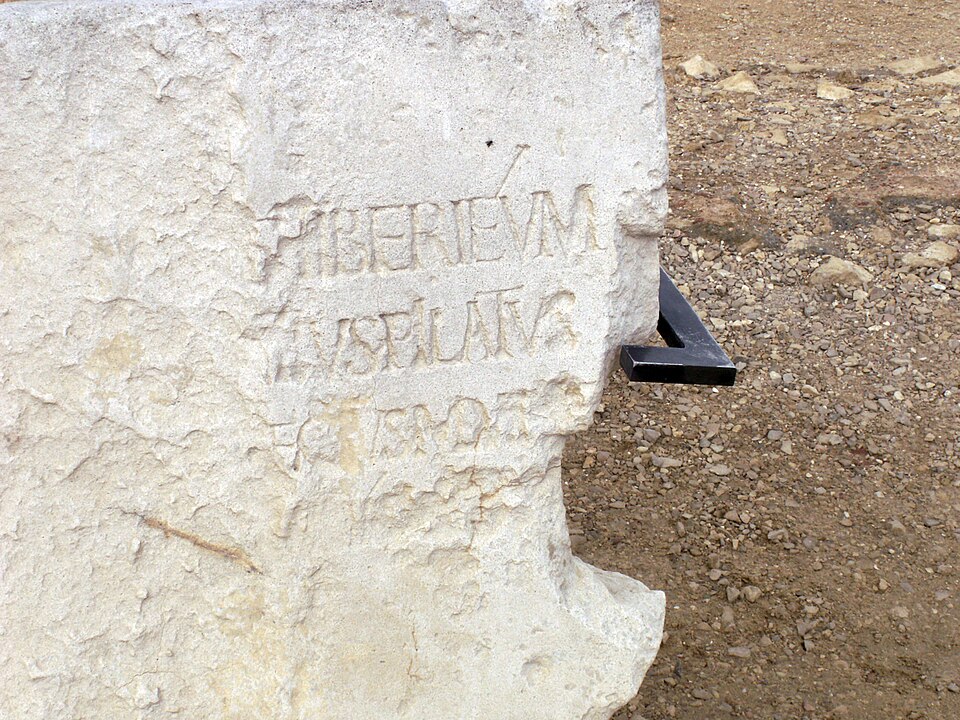
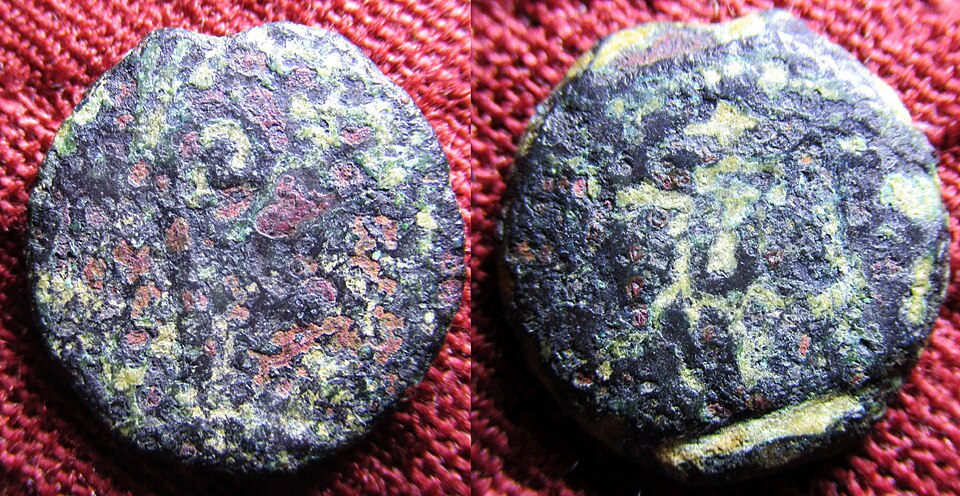
Worth stating first, because the page's framing hides it: Pilate himself is one of the best-attested equestrian officials of the early empire – a stone inscription bearing his name and title from Caesarea, coins he minted, a contemporary account by Philo, two extended narratives in Josephus, and the Gospel traditions. Nobody in this debate doubts Pilate existed and governed Judaea from 26 to 36/37 CE. That matters, because "executed under Pontius Pilate" is the specific, checkable, correct administrative detail on which the earliest Jesus tradition hangs.
"The Pilate cycle letters are all forgeries"
Mythicist claim: There is a collection of letters known as the Pilate cycle, purportedly written by or to Pilate. None of them are genuine. The stories aren't consistent, contain far-fetched details, and none are conclusively dated to the correct period.
Entirely correct, and there is no one to argue with. The Acts of Pilate, the Anaphora Pilati, the Herod–Pilate correspondence, the letters to Tiberius and Claudius – every text in the cycle is a Christian composition of the fourth century or later (the Claudius letter perhaps as early as the second), and critical scholarship has catalogued them as apocrypha for as long as critical scholarship has existed. The details the page enjoys retelling – Herod's worms, Longinus and the lion, Tiberius's stray arrow – are exactly why no historian has ever used these texts as evidence.
Two observations complete the picture.
First, who established this. The Pilate cycle was exposed and classified not by sceptics embarrassing the church but by textual critics inside the scholarly tradition – from Renaissance critics through Constantin von Tischendorf's Evangelia Apocrypha (1853) to the modern editions. The same historical-critical method that sorted these forgeries from the genuine Josephus is the method that affirms a historical Jesus. You cannot borrow the method's conclusions here and reject the method one page over.
Second, what the forgeries imply. Late Christian communities forged Pilate documents because Pilate was the fixed point everyone agreed on – the one Roman official in the story whose name pagan critics also knew (Tacitus cites him; Celsus knows the story). Forgeries attach to real anchors; nobody forges letters from a person nobody has heard of. The cycle is worthless as evidence about Jesus's trial and mildly interesting as evidence that the Pilate anchor was universal.
None of this touches historicity, because no historical case for Jesus has ever rested on the Pilate cycle. Remove every text on this page from the record and nothing about the mainstream position changes.
"Pilate was not known to succumb to crowd pressure"
Mythicist claim: Pilate was not known to succumb to crowd pressure. Josephus tells us Pilate hides soldiers in the crowd and has them attack and kill people on his command (Jewish War 2.9.3; Antiquities 18.3.2). He ordered more violence and was eventually removed from his position in 36 CE (Antiquities 18.4.1–2).
The implied argument: the Gospel Pilate, pressured by a crowd into executing a man he thought innocent, contradicts the historical Pilate; therefore the trial narrative is fiction – and with it, the execution.
Read one section earlier in the same book of Josephus. In Jewish War 2.9.2–3 (parallel Antiquities 18.3.1), Pilate brings military standards bearing the emperor's image into Jerusalem by night. Jews surround his tribunal in Caesarea for five days. Pilate has soldiers encircle the protesters with drawn swords – and the protesters bare their necks and refuse to move. And then, in Josephus's telling, Pilate, astonished at the strength of their devotion, removed the images from Jerusalem.
That is Pilate succumbing to crowd pressure, in the site's own source, one section before the episode it quotes. Philo adds a second instance: in the golden-shields affair (Embassy 299–305), Pilate backs down again when the Jewish leadership goes over his head to Tiberius. The aqueduct affair – the hidden-clubs massacre the page cites – shows he could also choose brutality; his removal in 36/37 after the Samaritan incident shows Rome itself judged him excessive. The historical Pilate is not "a man who never yields." He is a mid-ranking governor improvising between confrontation and retreat depending on the political cost: yielding over the standards, yielding over the shields, striking over the aqueduct, and finally miscalculating badly enough to lose his job. This is precisely the "two Pilates" problem that Helen Bond's standard study examines – and her conclusion is that the sources describe one politically calculating man in different situations, not one real man and one fictional one.
Now put the Gospel scene beside that. Strip the narrative theology – the hand-washing, the dream, the crowd's self-curse, which scholarship broadly treats as later apologetic shifting blame from Rome – and the bedrock event on which Gospels, Paul, Josephus and Tacitus agree is: a Judaean prefect, during Passover crowding, executed an accused "king of the Jews" quickly and without ceremony. Crucifying a potential troublemaker to keep a festival calm is not out of character for the Pilate of Josephus. It is the cheapest move on his board – the one that risks neither a riot nor a complaint to Rome.
And note what this argument would prove even if it worked. At most, that the Gospel trial scenes are dramatised – which mainstream scholarship substantially grants; Raymond Brown's two-volume Death of the Messiah sorts scene by scene which elements are bedrock and which are apologetics. It would not touch the execution itself, which is attested outside the trial narratives entirely: Paul within twenty-five years (1 Cor 2:2; 1 Thess 2:14–15), the non-Christian core of Josephus (Ant. 18.64: "Pilate, at the suggestion of the principal men amongst us, condemned him to the cross"), and Tacitus (Annals 15.44). "The trial scene is stylised" and "the execution happened" are both the consensus position. Only the second matters for historicity.
"There is no evidence outside the New Testament for Pilate's involvement"
Mythicist claim: Pontius Pilate was a Roman prefect; there is no evidence outside of the New Testament that confirms his involvement in the events described in the gospels.
This depends entirely on what "the events described" means.
If it means the dramatic detail of the trial – the dialogue, Barabbas, the hand-washing – then agreed: no external source confirms scene-level detail, and none would be expected to. Roman provincial hearings of non-citizens generated no records that survive, for anyone, anywhere. We do not possess a single trial transcript from Roman Judaea.
If it means Pilate's involvement in the execution of Jesus, the claim is false on the ordinary reading of the evidence. Josephus, Antiquities 18.64 – using only the core that specialists accept as non-Christian in origin – has Pilate condemning Jesus to the cross at the instigation of the Judaean elite. Tacitus, Annals 15.44, has Christus suffering "the extreme penalty during the reign of Tiberius at the hands of one of our procurators, Pontius Pilatus." Both passages get their own pages on the source site, and this site answers those in place (Josephus, Tacitus) – but notice the structure: "nothing outside the NT confirms Pilate's involvement" is only true after both external confirmations have been separately declared interpolated. The conclusion is doing the work of the premise.
The deeper point cuts the other way. "Crucified under Pontius Pilate" functions in the earliest tradition as a date stamp – the creeds use the governor's name the way ancient documents used eponymous officials, to fix an event in public time. An invented celestial myth had no need to chain itself to a checkable Roman administration within living memory; a movement spreading through the empire while witnesses and archives still existed took a real risk by naming names – unless the name was simply part of what happened.
Full bibliography
- Josephus, Jewish War 2.9; Antiquities 18.3–4.
- Philo, Embassy to Gaius 299–305.
- Tacitus, Annals 15.44.
- Helen K. Bond, Pontius Pilate in History and Interpretation (Cambridge: CUP, 1998).
- Raymond E. Brown, The Death of the Messiah, 2 vols. (New York: Doubleday, 1994).
- John P. Meier, A Marginal Jew, vol. 1 (New York: Doubleday, 1991).
- J. K. Elliott, The Apocryphal New Testament (Oxford: Clarendon, 1993).
- Bart D. Ehrman & Zlatko Pleše, The Apocryphal Gospels (Oxford: OUP, 2011).
- Constantin von Tischendorf, Evangelia Apocrypha (Leipzig, 1853).
Figures
- Fig. 1 · The Pilate Stone from Caesarea Maritima, naming "[Pon]tius Pilatus, [praef]ectus Iuda[ea]e". Wikimedia Commons
- Fig. 2 · A bronze prutah minted under Pilate – with the Caesarea inscription, part of the ordinary documentary trail of a real prefect. Wikimedia Commons