Pliny the Younger
Pliny attests Christians, not Jesus directly – scholarship has always graded him exactly that way. The page's real argument is an argument from Pliny's ignorance, and it dissolves once you notice what a Roman governor's letter is for.
Responding to mythicism.web.app/pliny-the-younger
Around 111–112 CE, Pliny, governing Bithynia-Pontus, wrote to Trajan asking how to handle accused Christians (Letters 10.96). The page quotes the letter in full and honestly – a courtesy worth acknowledging – and then builds its case not on what Pliny says, but on what he doesn't.
Grade the exhibit correctly before arguing about it. No careful historian cites Pliny as direct evidence for Jesus; Van Voorst's standard survey classes him as evidence for early Christianity, one step removed from its founder. What Pliny attests is a movement – and the page's argument is that the movement looks wrong: too unknown in Rome, too vague about its Christ. Both prongs fail on Roman rather than theological grounds.
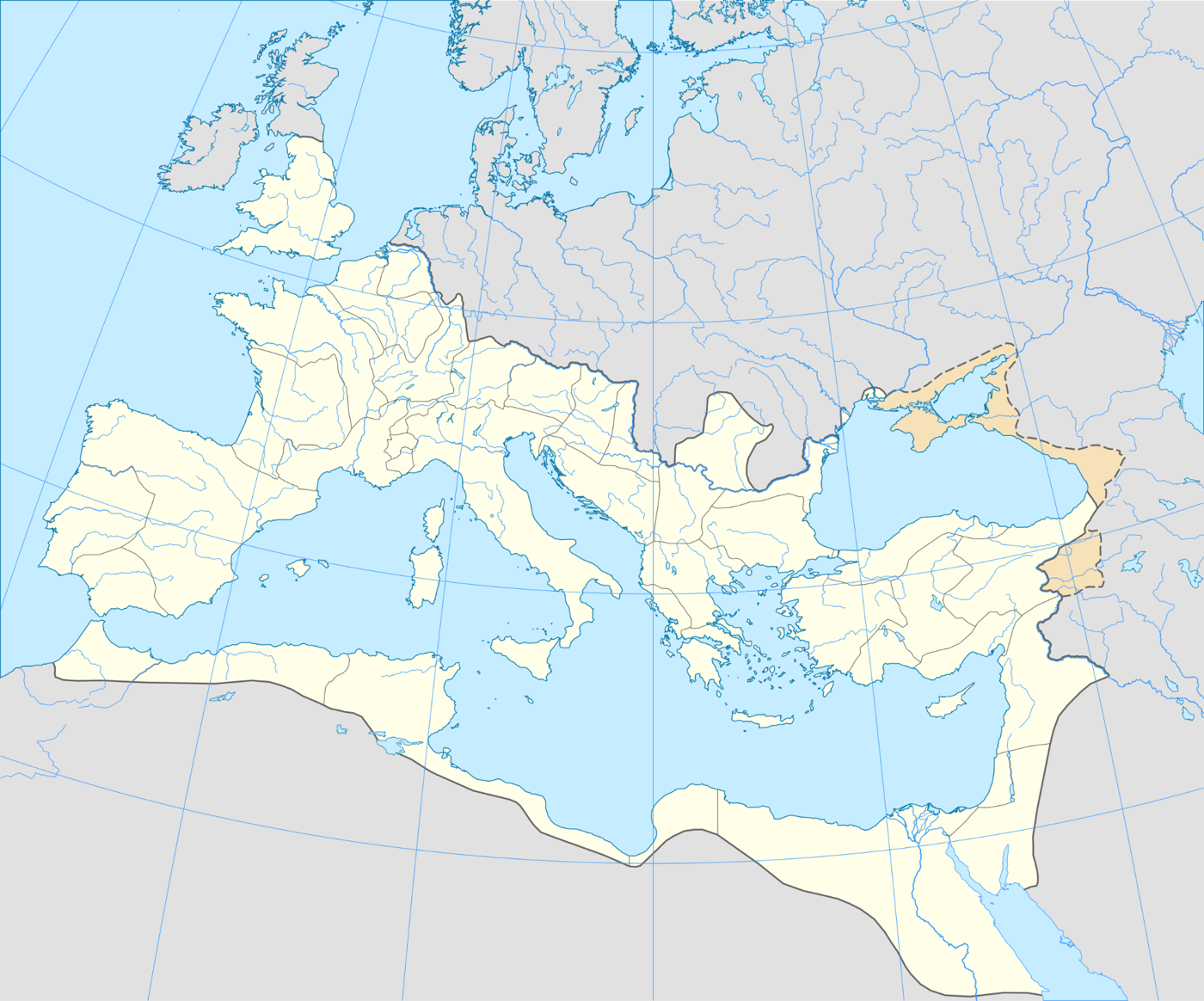 RomeTacitus c. 116; Suetonius c. 121Pontus-BithyniaPliny, 111-112SamosataMara bar SerapionJudaeawhere the movement began
Base map: Wikimedia Commons, CC BY-SA 4.0
"Pliny knew Rome intimately, yet had never encountered Christians"
Mythicist claim: By the church's count there had been six Popes by the time Pliny wrote. Rome was the central hub of Christianity, and Pliny — lawyer, judge, senator, priest, with an intense familiarity with the city — says "I have never participated in trials of Christians." Yet he appears to be encountering them for the first time in modern-day Turkey.
The argument runs: if Christianity were established, a man of Pliny's connections must have met it in Rome; he didn't; therefore the Roman church history is inflated. Notice that the second half of that conclusion is one this site substantially shares – see below – and the first half misreads Pliny's sentence.
Cognitionibus de Christianis interfui numquam – "I have never taken part in trials of Christians." This is a statement about Pliny's judicial CV, not about whether he had heard of Christians. The letter proves on its face that he had: he knows the name, knows trials happen, knows there is an established practice he hasn't learned ("I do not know what offenses it is the practice to punish" – a practice implies precedents), and he tells Trajan people abandoned the cult twenty-five years ago – which puts Christians in Bithynia by the mid-80s, under Domitian, while Pliny was climbing the career ladder in Rome. His problem is procedural: what's the charge, does recanting count, is the name itself criminal? Those are exactly the questions of a magistrate meeting a legal novelty – a cult with no statute – not a man meeting a rumour for the first time.
As for the six Popes: the papal succession list is fourth-century back-formation, and critical scholarship agrees Rome's church in this period was a cluster of house congregations led by presbyters, a few thousand people at most in a city of a million – socially invisible to a senator unless a case crossed his docket. The page is attacking Catholic tradition, and on that narrow point it wins; but the victim is the Liber Pontificalis, not the historicity of anyone. Meanwhile the letter's actual data cuts the other way: an obscure eastern cult big enough by 112 to empty temples in Pontic towns, with members of every rank recanting since the 80s, is a movement with decades of prior growth behind it – which is what needs explaining, and what "a man executed in 30, followers spreading since" explains without strain.
"Pliny never mentions Jesus, Judaea, the crucifixion, Pilate, or the Gospels"
Mythicist claim: What we could have expected but isn't mentioned: Jesus, Judea, Judaism, disciples, resurrection, execution or method, Messiah, Pontius Pilate, meaning of Christ, Gospels. After torturing two deaconesses he found only "depraved, excessive superstition."
Ask what document is being read. This is not an ethnography; it is a procedural memo to the emperor about sentencing. Pliny's questions are: punish the name or the crimes? pardon recanters? distinguish by age? His evidence section exists to establish one legally relevant fact – whether the cult commits actual crimes (fraud, theft, adultery, forbidden assembly) – and he reports it does not: an oath against crime, ordinary food, a pre-dawn hymn. The founder's biography, the province he died in, and the theology of his title are irrelevant to a sentencing question, and Roman administrative correspondence is ruthlessly economical. Expecting Pilate and the resurrection in Letters 10.96 is expecting a footnoted religion primer in an internal memo about charging procedure.
What Pliny does record is more useful than what the page misses: Christians "sing a hymn to Christ as to a god" – Christo quasi deo, "as if to a god." The qualification has been noticed since antiquity, and Tertullian already read it the natural way: worship offered to a figure who was not simply one more god but a man being treated as one. It is a hostile outsider's paraphrase of exactly the cult a recently executed founder produces. And "superstition" (superstitio) is not, as the page suggests, a strange word to apply to something Jewish and old – it is the precise technical sneer Roman elites reserved for foreign rites that transgressed Roman religious norms; Tacitus applies it to Christians in the same decade, and Roman writers applied it to Judaism itself, longevity notwithstanding.
Two smaller corrections. The page calls the confessing Christians of 64 "terrorists" – Tacitus says they were convicted on odium humani generis, "hatred of humankind," a catch-all for social withdrawal, and modern historians of the persecutions (including the sceptical ones – Moss, Shaw) treat the arson charge as scapegoating, not evidence of a crime wave. And its closing spoiler – "Tacitus didn't have the information either; the passage is interpolated" – is answered at length on the Tacitus page: the interpolation case does not survive contact with the manuscript evidence or with the scholarship the site itself cites.
The bottom line is unglamorous and firm: by 112, a Roman governor with no Christian sources, using torture and imperial correspondence, independently confirms a Christ-centred cult spread through Anatolian villages, with members who had joined and lapsed decades earlier. One step removed from Jesus – exactly as scholarship grades it – and one more strand in a rope the mythicist thesis has to cut everywhere at once.
Full bibliography
- Pliny the Younger, Letters 10.96–97; Trajan's rescript.
- Robert E. Van Voorst, Jesus Outside the New Testament (Grand Rapids: Eerdmans, 2000).
- Peter Lampe, From Paul to Valentinus (Minneapolis: Fortress, 2003).
- L. F. Janssen, "'Superstitio' and the Persecution of the Christians," VigChr 33 (1979), 131–159.
- Tertullian, Apology 2.
- Candida Moss, The Myth of Persecution (New York: HarperOne, 2013).
Figures
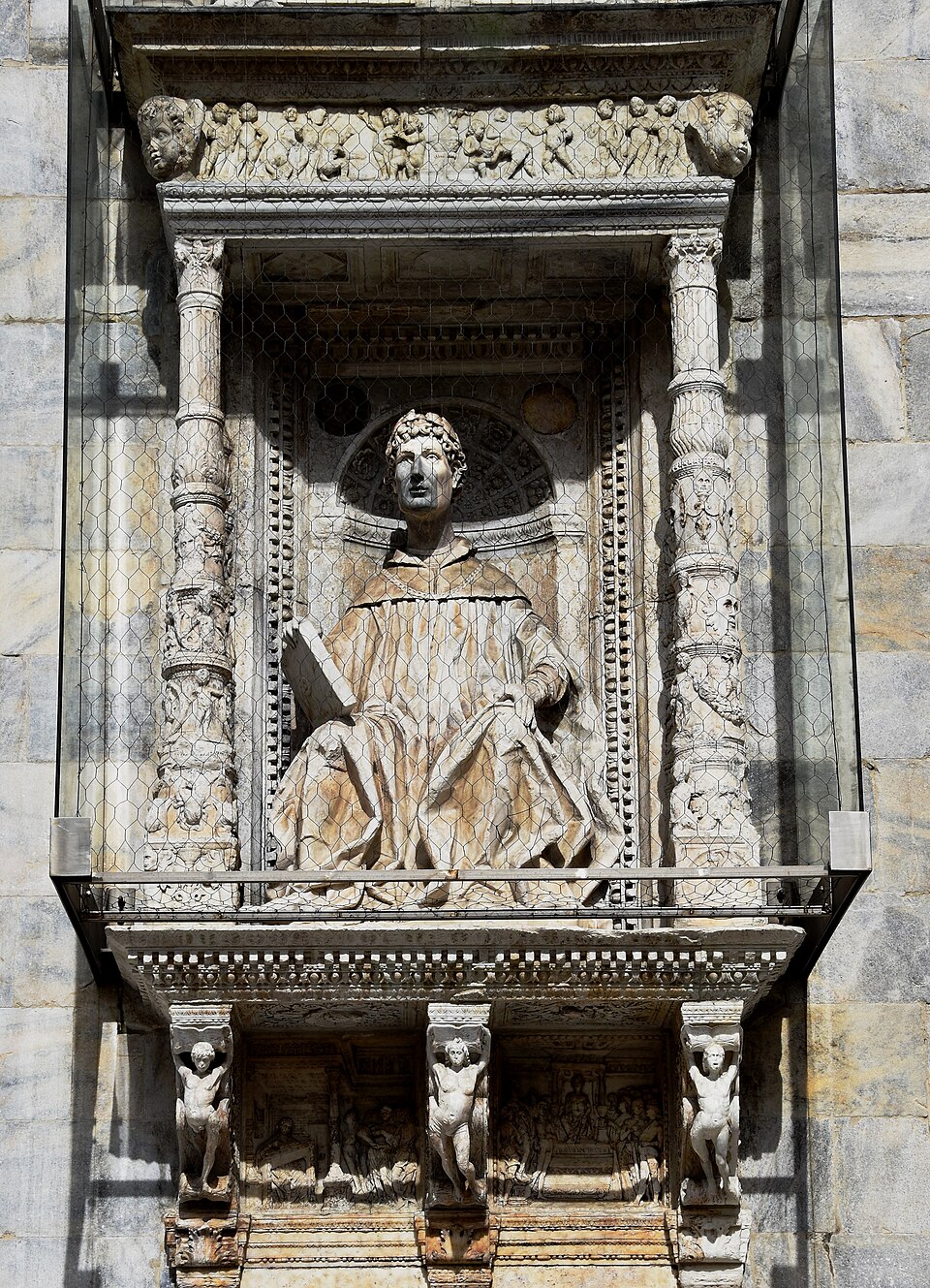
- Fig. 1 · Statue of Pliny the Younger on the façade of Como Cathedral (15th century). Wikimedia Commons