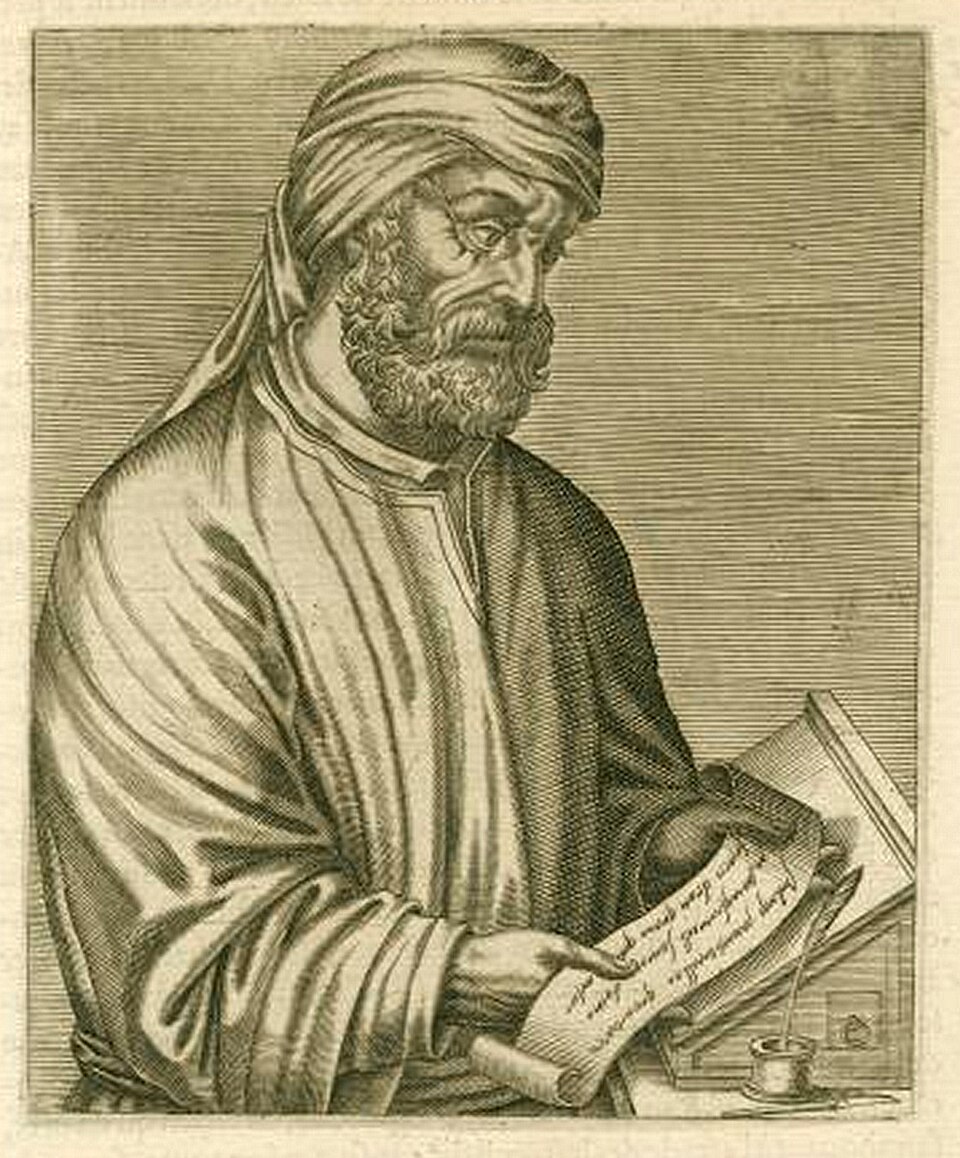
Tertullian
Correct on every fact, and there is nothing to rebut – because no historian offers Tertullian as evidence for Jesus. What his pages actually witness is the shape of the second-century argument: pagans mispronouncing the name, Marcion cutting the flesh out of Luke, and nobody anywhere denying the man.
Responding to mythicism.web.app/tertullian
Tertullian of Carthage, the first great Latin churchman, converted around 197 and spent the next two decades writing polemic in every direction – against pagans, Jews, gnostics, Marcion, and eventually the mainstream church itself. The page's facts about him are accurate and require almost no correction. What requires correction is the implied frame: that someone, somewhere, offers Tertullian as evidence for the existence of Jesus.
"Tertullian is often cited by Christians, but he wasn't a contemporary"
Mythicist claim: Tertullian is often mentioned as a source by Christians, but he wasn't contemporary — born 120 years after the supposed death of Jesus. He converted around 197, wrote apologetics, coined the Latin "Trinity," and is the father of Latin Christianity.
All true. And the appropriate response is to state plainly what the scholarly literature already practises: Tertullian is not evidence for Jesus's existence and is never cited as such in critical scholarship. Van Voorst's survey of sources outside the New Testament doesn't audit Tertullian as a witness to Jesus, for the same reason no one audits Augustine: a writer born c. 155 transmits the tradition; he cannot independently attest its founder. If popular apologetics deploys "Tertullian says…" as historical evidence, this site joins the page in objecting. That entire genre of citation confuses early theology with early testimony.
What Tertullian is evidence for – first-rank, contemporary, undisputed evidence – is the state of the argument around 200 CE. And on the two points where the page cites him, his testimony runs against the mythicist reading each time:
The "Chrestians" pun. The page says "Tertullian also wrote that the Chrestians are Christians." What he wrote (Apology 3, the page's own link) is that the name is mispronounced by pagans – "even when it is incorrectly pronounced by you 'Chrestian' (for not even is your acquaintance with the name accurate)" – and he puns that the error is flattering, since chrestos means kind. This is a pagan mispronunciation being corrected, not an identity being confirmed; it is the linchpin evidence for how Chrestus/chrestianos arose in Tacitus and Suetonius, covered on Before Jesus, Tacitus and Suetonius. Citing Tertullian for "Chrestians are Christians" while omitting "incorrectly pronounced by you" is quoting the answer as if it were the puzzle.
The dating of Marcion. Correct: Against Marcion 1.19 dates Marcion's gospel activity to the era of Antoninus Pius, 115 years and months after Tiberius – the anchor scholarship uses for the 140s. Note what Tertullian is doing with that arithmetic: proving Marcion's gospel is a late arrival against the older documents the churches already held. His five books then audit Marcion's Luke cut by cut (see Marcion) – a procedure only possible, on both sides of the quarrel, if a fuller Luke pre-existed Marcion's edition. The page's own citation is one of the stronger pieces of evidence against its neighbouring page's Marcion-priority argument.
And throughout those five books, the position Tertullian batters is Marcion's docetism – a Jesus too heavenly to be born. The heresiarch and the heresiologue disagree about everything except that there was a Jesus under Tiberius; the fight is over whether his flesh was real. By 200 CE, on the evidence of the century's most prolific controversialist, the option "there was no such man" had still not occurred to anyone in the Mediterranean – not to the pagans he answers in the Apology, not to the Jews he argues with in Adversus Judaeos, not to Marcion, not to the gnostics. The mythicist position has no ancient ancestors, and Tertullian's shelf of enemies is the inventory that proves it.
"In Against Marcion 5.1, Tertullian questions Paul's origins"
Mythicist claim: In Against Marcion book 5 chapter 1 Tertullian puts into question Paul's origins according to Marcion. Tertullian believes Paul's story begins in the Old Testament from the line of Benjamin.
Another recent addition, and it misreads the genre of the passage. Against Marcion 5.1 opens with a debater's fork aimed at Marcion's method, not at Paul: Marcion claims Paul as his sole apostle while rejecting Acts - the one narrative document that recounts Paul's calling. So Tertullian demands that Marcion produce the origin of "your apostle" from Marcion's own accepted texts, which he cannot. It is a challenge about an opponent's sources, in a work whose remaining chapters then argue through the Pauline letters one by one as authentic, shared, decades-old documents - the very reason Book 5 exists. Nobody writes a verse-by-verse rebuttal out of letters he suspects of not being Paul's.
The Benjamin material is the same misreading at smaller scale. Tertullian plays on Genesis 49:27 - Benjamin as "a ravening wolf" - and on Saul the Benjaminite as figures of Paul the persecutor-turned-apostle. That is typological exegesis, the standard patristic reading of the Old Testament as figure, offered as figure. It is not a theory that "Paul's story begins in the Old Testament," any more than Tertullian's other typologies make Joshua the origin of Jesus's story.
Read in its own century, the chapter is evidence in precisely the wrong direction for the page. In 207, the Catholic and the Marcionite parties possess the same Pauline corpus and argue about whose text of it is corrupted - a debate only possible about letters both sides had long held as authorities (Marcion, Paul). Where the page's earlier material had Tertullian dating Marcion's gospel and complaining of interpolated Luke, this addition has him cross-examining Marcion's warrant for Paul - hostile testimony, once again, to a shared and settled documentary record.
"He was writing fifty years after Marcion died, knowing he could get no reply"
Mythicist claim: Tertullian was born in 155 CE and Marcion died around 160, when Tertullian was about five. He wrote Against Marcion around 207, almost fifty years after Marcion's death. He is composing objections directly to Marcion but would know that he will not get a reply or counterargument.
The chronology is right, and the observation about polemical convenience is fair as far as it goes. Arguing with the dead is easy, and Tertullian is not a neutral reporter of anything: this site treats him as a hostile witness throughout, and says so.
But look at what the argument would have to prove to be worth anything here, and then at what the same page needs Tertullian for.
Unanswerability does not touch the relevant evidence. The reason Tertullian matters is not that he characterises Marcion accurately, or wins his arguments. It is that Book V works through Marcion's apostolic collection letter by letter, quoting and disputing a text he expects his readers and his opponents to possess. You cannot conduct a verse-by-verse argument over the wording of documents against a party that does not hold them. Whether Marcion could reply in 207 has no bearing on whether both parties had the letters, which is the only thing the passage is used to establish.
And the argument is double-edged. If a fifty-year gap and the absence of reply make a witness worthless, the page has a problem, because it relies on Tertullian for its own load-bearing claims: for dating Marcion's gospel between Tiberius and Antoninus Pius, for the 144 date, and for the report that Marcion accused others of interpolating Luke. Those come from the same book by the same author at the same distance. A source cannot be reliable when it dates your thesis and unreliable when it embarrasses it.
The wider point stands and this site has made it elsewhere: nearly everything known about Marcion comes through people who despised him, which is a real limitation on the whole reconstruction (Marcion). That limitation applies with equal force to the second-century-origins thesis, which needs those same hostile sources to say what it wants and not what it doesn't.
Full bibliography
- Tertullian, Apology; Against Marcion; Adversus Judaeos (ANF vols. 3–4).
- Timothy D. Barnes, Tertullian: A Historical and Literary Study, rev. ed. (Oxford: Clarendon, 1985).
- Robert E. Van Voorst, Jesus Outside the New Testament (Grand Rapids: Eerdmans, 2000).
Figures
- Fig. 1 · Tertullian in a later imagined portrait; no ancient likeness exists. Wikimedia Commons