Does Tacitus Prove Jesus Existed?
Tacitus is useful hostile corroboration for Jesus’s execution under Pilate and the early Christian movement, but no single late source proves historicity by itself.
5 sections4 citations1 figure
The short answer: Tacitus does not prove Jesus existed by himself. Around 115–120 CE he reports that Christus, founder of the Christians, suffered the “extreme penalty” under Pontius Pilate during Tiberius’s reign. The passage is hostile, textually secure in substance and useful as Roman corroboration, although Tacitus does not identify his source.
What does Annals 15.44 say?
While describing Nero’s response to the fire of Rome, Tacitus explains the hated group’s name and origin. Christus was executed under Pilate; the movement then spread from Judaea to Rome.[1] The notice appears inside a Roman political narrative, not an argument for Christianity.
Could a Christian have inserted it?
The contemptuous vocabulary and depiction of Christianity as a destructive superstition are poorly suited to Christian fabrication. The passage also belongs grammatically and narratively to Tacitus’s account.[1][4] The surviving manuscript has a correction from “Chrestians” to “Christians”, but that visible correction is not evidence that the whole paragraph was inserted.
Did Tacitus use official records?
We do not know. Claims that he consulted Pilate’s report are too confident. Claims that he merely repeated Christian preaching are also unproved. Roman elite knowledge, police questioning, common report and written sources are all possible.
That uncertainty limits the passage’s independence. It does not make the text disappear. At minimum, it records what a well-connected Roman historian accepted about the movement’s origin by the early second century.
Why “procurator” rather than “prefect”?
The Caesarea inscription calls Pilate prefect. Tacitus uses the title more familiar in his own period, and other ancient authors use overlapping administrative language.[2] An anachronistic title is a reason for precision, not a demonstration of Christian forgery.
How much evidential weight should it carry?
Tacitus corroborates execution under Pilate and rapid dissemination of the movement. The historical case does not rest on him: Paul, James and first-century Christian traditions are earlier. Tacitus matters because his hostility and Roman setting make him a different kind of witness.
See Tacitus: the full response for the manuscript correction, Nero, titles and stylometry.
Sources and further reading
- Tacitus, Annals 15.44, Latin text and commentary. ↩ ↩2
- Robert E. Van Voorst, Jesus Outside the New Testament (Eerdmans, 2000). ↩
- Brent D. Shaw, “The Myth of the Neronian Persecution”, JRS 105 (2015), 73–100.
- Christopher P. Jones, “The Historicity of the Neronian Persecution”, NTS 63 (2017), 146–152. ↩
Figures
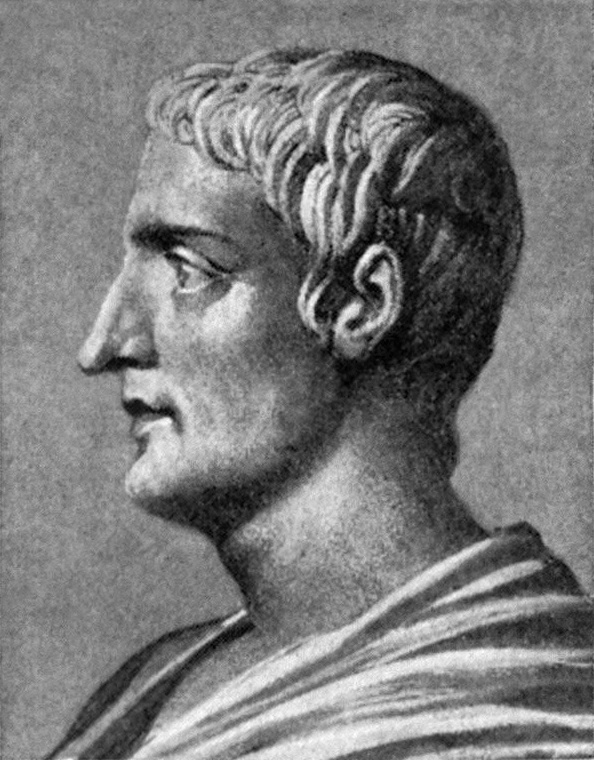
- Fig. 1 · Statue of Tacitus outside the Austrian Parliament, Vienna. Wikimedia Commons