Why Are There No Contemporary Records of Jesus?
No surviving author describes Jesus during his lifetime. The question is not whether that gap exists, but whether a rural Galilean preacher executed as a provincial criminal should have entered the tiny surviving literary record.
4 sections5 citations1 figure
No surviving text mentions Jesus while he was alive. The earliest Christian writings are Paul's letters from roughly twenty years after the usual crucifixion date. Josephus writes about six decades after it; Tacitus about eight.[1][5] Anyone presenting those as contemporary witnesses is wrong.
The historical question begins after that concession: is the silence surprising enough to count against Jesus's existence?
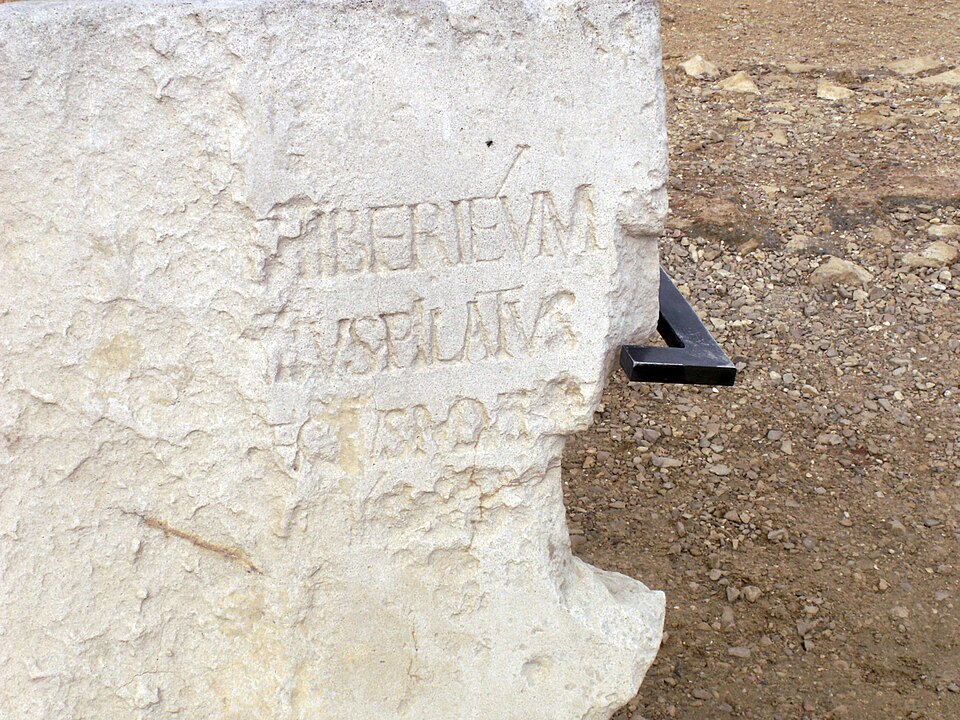
What survives from Roman Judaea
The literary record is not a newspaper archive with one missing name. Almost no writing by inhabitants of early first-century Galilee survives. Most people left no text, inscription or administrative file by which we can identify them. Executions of non-citizen provincials were routine, and Rome did not preserve a searchable central register for modern historians.
Even Pontius Pilate, the prefect who governed Judaea for about ten years, is directly attested by one damaged inscription and discussed by writers whose works survived through later copying. We know he handled many cases. We possess no trial transcript from his administration.
Jesus, on the minimal historical reconstruction, spent a short public career teaching in villages, entered Jerusalem during a festival and was executed with other criminals. His later importance does not make him important to an elite observer before the movement grew.
The writers who “should” have noticed
Lists commonly include Philo, Seneca, Nicolaus of Damascus, Justus of Tiberias and Gallio. The force of each silence depends on what the writer covered and whether the relevant work survives.
Philo wrote about philosophy, scripture, Alexandrian Jewish affairs and his embassy to Caligula. His surviving discussion of Pilate concerns a political confrontation over golden shields, not a survey of provincial executions.[4] Seneca's surviving work likewise gives no running account of Judaea. Nicolaus died or stopped writing too early to be useful. Justus's history is lost, so later summaries of it cannot tell us every person it named. Gallio left no surviving historical work at all.
An argument from silence becomes strong only when a source was well placed, intended to report the relevant class of event, and can be expected to have included it. A writer being alive at the same time is not enough.
Later evidence can still be historical evidence
Ancient history routinely depends on sources written decades or centuries after the people concerned. Distance weakens evidence; it does not automatically erase it. Historians ask whether a source had access to earlier material, whether independent sources converge, whether a report fits its context and whether the author had reason to invent it.
For Jesus, the earliest evidence is not Tacitus but Paul: letters from a participant who says he met Cephas and James. The Gospels are later and theologically shaped, but preserve multiple streams of tradition.[2] Josephus and Tacitus add limited external corroboration. None is a contemporary biography. Together they are more than an empty record.
What the missing records do establish
The silence prevents extravagant claims. We cannot produce a Roman arrest warrant, census entry, birth certificate or eyewitness diary. It also makes attempts to reconstruct Jesus's personality precarious.
It does not distinguish well between two hypotheses: an obscure preacher whose importance became visible only after his death, and no preacher at all. Both predict little contemporary notice. The evidence that distinguishes them lies in the early movement's internal contacts and traditions, especially Paul, not in documents the ancient world gives us no reason to expect.
Sources and further reading
- Robert E. Van Voorst, Jesus Outside the New Testament (Eerdmans, 2000), chapters 2–3 on classical and Jewish writers; chapter 2’s sections on Tacitus and its conclusions. Contents preview. ↩
- Helen K. Bond, The Historical Jesus: A Guide for the Perplexed (T&T Clark, 2012), introduction on the sources and the problems of historical reconstruction. The publisher’s page includes contents. ↩
- Maurice Casey, Jesus: Evidence and Argument or Mythicist Myths? (T&T Clark, 2014), chapters 2–3 on method and the dating and reliability of the Gospels. Further reading.
- Philo, Embassy to Gaius 299–305, for his surviving Pilate episode. ↩
- Josephus, Antiquities 18.63–64, and Tacitus, Annals 15.44, the passages under discussion. These are later accounts, not records from Jesus’s lifetime; the wording of the Josephus passage is disputed. ↩
Figures
- Fig. 1 · The Pilate Stone from Caesarea Maritima, naming "[Pon]tius Pilatus, [praef]ectus Iuda[ea]e". Wikimedia Commons