Marcion
A cluster cannot establish which text came first. Marcion priority needs an argument for the direction of dependence.
Responding to mythicism.web.app/marcion
Claim headings and boxes summarise the source; consult the linked page for its original wording.
The response
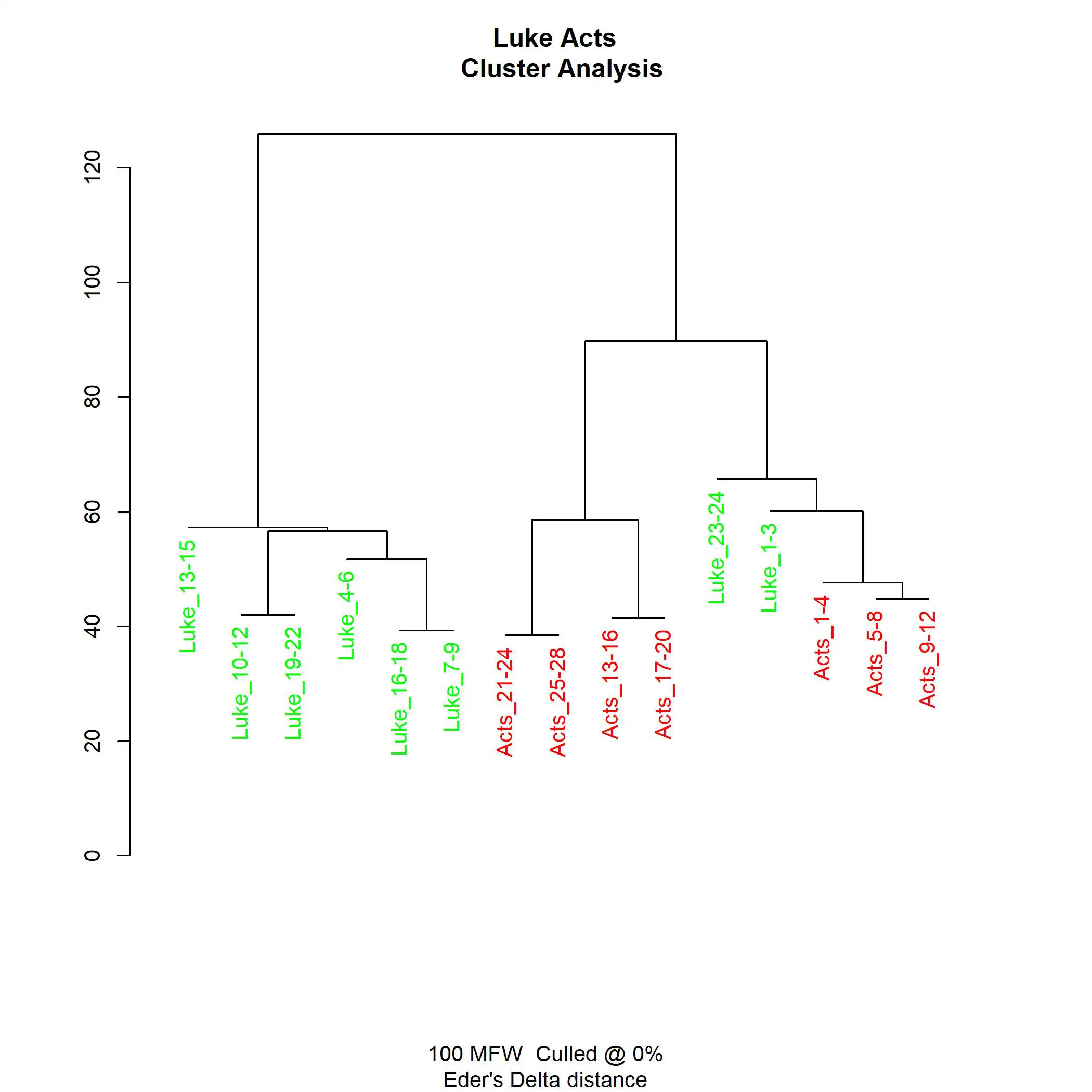
A cluster cannot establish which text came first. Marcion priority needs an argument for the direction of dependence.
Shared wording is compatible with competing histories of editing and transmission. The maximalist reconstruction must discriminate between them rather than simply select the sequence it needs.
Marcion matters to mythicism for one strategic reason: if Marcion's Evangelion came first and Luke expanded it, and if Paul's letters surface with Marcion's Apostolikon, then the whole documentary record can be dragged into the mid-second century, far from any historical Jesus. The page assembles that case. Parts of it are respectable minority scholarship; the load-bearing part is not.
"Marcion published the first canon, and the church's excommunication story is undocumented"
Source claim (summary): Marcion was the first to publish a complete New Testament canon around 144 CE — the Evangelion plus ten Pauline letters. Claims of his excommunication have no surviving records, and the papal chronology of the period is unclear.
Mostly agreed. Marcion's was the first fixed two-part canon we know of, and its shape (one gospel + Paul) demonstrably provoked the proto-orthodox toward defining their own larger lists – that is a standard finding of canon scholarship from Harnack to the present. The excommunication of 144 with its refunded donation comes from Tertullian's polemic, written sixty years later; no independent record exists, and the papal succession dates of the 140s–150s are indeed reconstructions with wide error bars (as this site has said elsewhere: the monarchical papacy itself is a later back-formation).
One correction of framing: "first to publish a canon" does not mean "first to possess the texts." An edition presupposes its contents. Marcion's Apostolikon was an edition of ten already-circulating Pauline letters – his opponents' complaint, from the beginning, was about his text-critical scalpel, not about him introducing unknown documents. Justin, writing within a decade of Marcion's activity, treats "memoirs of the apostles" as read liturgically "every Sunday" in churches that despised Marcion – an established practice, not a brand-new import. The canon debate Marcion started was about which books, never about whether the books had just appeared.
"Stylometry shows Evangelion is the majority of Luke — so Luke expanded Marcion, not the reverse"
Source claim (summary): Reconstructions of Evangelion are present in the majority of Luke (chapters 4–22), while Luke 1–4 and 23–24 align with Acts. This result would not be possible if Evangelion were written after Luke. The claims about Marcion truncating Luke are false; published works were taken and expanded. Scribes were more prone to add than omit (Griesbach, Ehrman, Carr, Wallace). Evangelion could be Q.
Three distinct arguments are braided here – priority scholarship, scribal tendency, and a stylometric result. Untangle them.
Marcion-priority is a real position, cite it properly. A handful of serious scholars – Joseph Tyson, Matthias Klinghardt, Jason BeDuhn in a qualified way, with Markus Vinzent the most radical – argue some form of Evangelion-first or common-source theory. They are a genuine minority against a large majority (represented by Dieter Roth's and Judith Lieu's full-length studies) holding that Evangelion is an edited Luke. An honest page would name both camps; this one presents the minority conclusion as a finding. Note also what the minority actually claims: Tyson and Klinghardt argue about literary priority between documents in the early second century – none of them concludes Jesus didn't exist, and Klinghardt's reconstruction still has Evangelion narrating a baptised, teaching, crucified man.
The scribal-tendency argument proves too much. Lectio brevior – "scribes add rather than omit" – is a rule of thumb about copyists' accidental and pious growth, and modern textual criticism (including the very Wallace essay the page cites) has heavily qualified it. But Marcion was not a copyist: he was an editor with a declared theological program, and his opponents' charge was deliberate excision – a different activity to which the canon does not apply. Ehrman, cited by the page as an authority on scribal addition, is himself explicit that Marcion abridged Luke. Citing Ehrman's scribes to overturn Ehrman's Marcion is quote-mining the man against himself.
The clustering does not establish the direction of editing. Similarity between material shared by Evangelion and Luke can fit more than one source relationship. A reconstruction must identify its uncertain wording, and the analysis should be repeated across plausible alternatives. Reconstruction is not inherently circular, but its assumptions affect the result. The required validation is explained in Stylometry. The separate proposal that Evangelion is Q also needs an explicit account of its narrative material: Q is normally a hypothesis about the non-Markan material shared by Matthew and Luke, not simply another name for a reconstructed Gospel.
And the conclusion wouldn't follow anyway. Suppose Marcion-priority were true. Then our earliest gospel-form would be a c. 100–130 text narrating John the Baptist, Capernaum, teaching, Pilate, crucifixion – a human career – edited in one direction or the other. The distance from "Luke post-dates Evangelion" to "there was no first-century Jesus" is the entire length of the argument, and nothing on the page walks it: Paul, Mark, Matthew, Josephus and Tacitus are all untouched by which Lukan recension came first.
"Marcion's Jesus was a deity sent down from heaven — and 1 Timothy warns against his 'Antithesis'"
Source claim (summary): Marcion believed the Old Testament god was an evil Demiurge, and presented Jesus as a deity sent down from heaven by the Unknown God to save humanity. Additionally, 1 Timothy 6:20 warns against "opposing arguments falsely called knowledge" — antithesis and gnosis. Marcion was a gnostic and published a work called Antithesis.
The 1 Timothy point is sharper than the page may realise it's conceding: many critical scholars agree that 1 Tim 6:20's antitheseis tēs pseudōnymou gnōseōs looks like a swipe at Marcion's Antitheses – and use it as evidence for dating the Pastorals to the mid-second century. Fine: the Pastorals are pseudepigraphal on this site's account too (see Paul – only the seven undisputed letters carry weight here). A late 1 Timothy costs the historical case nothing.
The description of Marcion's Jesus, though, is where the page hands over more than it takes. Yes: Marcion's Jesus was a heavenly being who appeared – descending directly to Capernaum "in the fifteenth year of Tiberius," untouched by birth, in the semblance of flesh. That is docetism, and here is the point: it was the heresy. The second century's actual argument was between Marcionites and docetists saying Jesus was too divine to be really human, and the proto-orthodox – Ignatius, Polycarp, Justin, Irenaeus, Tertullian – hammering back that he was "truly born, truly ate and drank, truly crucified under Pontius Pilate" (Ignatius, Trallians 9, written before Marcion's canon). If earliest Christianity had begun, as mythicism proposes, with a celestial Jesus later historicised, Marcion is where the celestial original should surface as the conservative party appealing to the old texts. Instead the argument ran the other way around: Marcion had to cut the human material out of documents everyone already had, got condemned across the Mediterranean within a decade for the novelty, and even his Jesus still dies under Pilate in a datable year. The best-documented "heavenly Jesus" movement of antiquity is a demonstrable revision of an earthly-Jesus tradition – which is the mythicist thesis inverted, with receipts.
Full bibliography
- Adolf von Harnack, Marcion: The Gospel of the Alien God (ET Durham: Labyrinth, 1990).
- Judith M. Lieu, Marcion and the Making of a Heretic (Cambridge: CUP, 2015).
- Dieter T. Roth, The Text of Marcion's Gospel (Leiden: Brill, 2015).
- Joseph B. Tyson, Marcion and Luke-Acts: A Defining Struggle (Columbia: USC Press, 2006).
- Matthias Klinghardt, The Oldest Gospel and the Formation of the Canonical Gospels (Leuven: Peeters, 2021).
- Jason BeDuhn, The First New Testament: Marcion's Scriptural Canon (Salem: Polebridge, 2013).
- Tertullian, Against Marcion; Irenaeus, Against Heresies 1.27, 3.12–14.
- Ignatius, Trallians; Smyrnaeans; Justin, 1 Apology 26, 58, 66–67.
- John Barton, A History of the Bible (London: Allen Lane, 2019).
Figures
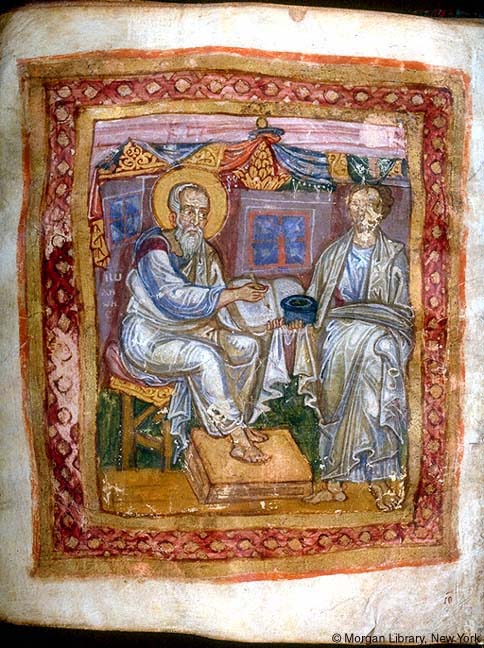
- Fig. 1 · The Apostle John rejecting Marcion of Sinope, from an 11th-century manuscript (Morgan Library MS 748). Wikimedia Commons
- Fig. 2 · The source site’s Luke–Acts cluster analysis: 100 MFW, 0% culling, chapter samples – the run behind the priority claim examined below. mythicism.web.app