Was Christianity Invented in the Second Century?
A second-century invention theory must move Paul's letters, their communities and their reception together. The surviving evidence instead shows a first-century movement developing into the diverse Christianity visible in the second century.
6 sections6 citations1 figure
The short answer: no single document makes a second-century origin impossible, but the documents form an interlocking sequence. Paul's letters presuppose communities, disputes and earlier leaders in the first century. By the turn of the century, 1 Clement knows Paul’s correspondence with Corinth. Soon afterwards, Pliny encounters established Christian communities in Bithynia. Marcion's later edition of Pauline letters presupposes letters he could collect and edit.
The second century transformed Christianity. It did not create the whole movement from nothing.
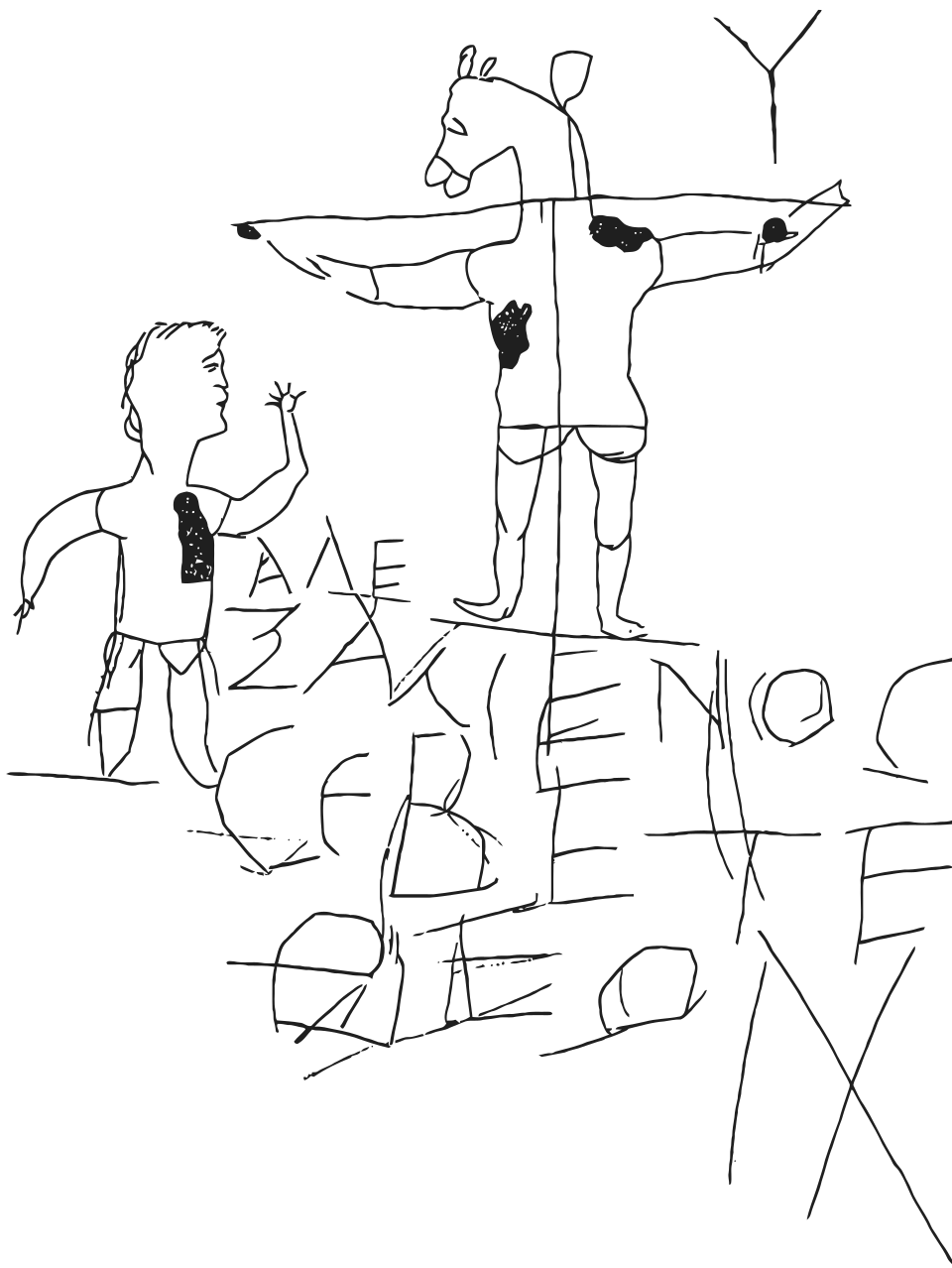
What would a second-century invention have to explain?
A serious theory must explain more than the date of one manuscript. It must account for:
- letters written into local disputes in Corinth, Galatia, Philippi, Thessalonica and Rome;
- Paul's relationships with Cephas, James, John, Barnabas and rival missionaries;
- a Roman Christian letter addressing the Corinthian church and explicitly recalling Paul's earlier letter;
- a Roman governor finding Christians across Bithynia by the early second century;
- competing Christian teachers who argue over inherited writings rather than describing their recent manufacture;
- manuscript and citation evidence that becomes increasingly dense through the second century.
Moving every text later does not answer those relationships. It moves the relationships later too, producing a compressed literary explosion that needs its own evidence.
Pauline communities and letters50s CELocal disputes across the eastern Mediterranean
Nero and Roman Christians64 CERecalled by Tacitus and 1 Clement
1 Clement to Corinthabout 90s CEExplicitly recalls Paul's Corinthian letter
Pliny in Bithyniaabout 111–113 CEEstablished communities and regular worship
Ignatian correspondenceearly to mid-second centuryMultiple churches, offices and inherited traditions
Marcion's Pauline collectionabout 140 CEEdition and selection presuppose prior texts
Why are Paul's letters difficult to manufacture late?
The undisputed letters are occasional correspondence. They leave people unexplained, answer questions we no longer possess, change direction mid-argument and reveal conflicts that no later church achieved an interest in inventing. Paul quarrels with Cephas, struggles to collect money, defends his status, names co-workers and addresses communities with different problems.
This does not automatically date every line. Letters can be edited, combined and interpolated. It does mean that wholesale second-century fabrication requires a plausible fabricator, purpose and historical setting for seven distinct but connected compositions. Standard Pauline chronology remains open to revision at the edges because it explains the evidence with fewer assumptions. Oxford's current overview describes the authentic letters as the earliest New Testament writings and earliest documentary witnesses to the Jesus movement.[1]
For the detailed chronological issues, see the response on Paul and What Did Paul Know About Jesus?.
What does 1 Clement contribute?
1 Clement is a letter from the Roman church to Corinth. In chapter 47 it tells its recipients to "take up the letter of the blessed Paul the apostle" and recalls the factions around Paul, Cephas and Apollos known from 1 Corinthians.[3] The simplest reading is that a Roman author and a Corinthian audience already share knowledge of Paul's earlier correspondence.
The letter's precise date is debated. Its importance does not depend on fixing it to one year. It is widely treated as the earliest surviving Christian letter outside the New Testament and places a network of Roman and Corinthian Christians, together with received Pauline correspondence, before the mature second-century canon debates.
What does Pliny contribute?
Pliny the Younger wrote to Trajan while governing Bithynia-Pontus, usually dated around 111–113. He describes accused Christians meeting before dawn, singing to Christ "as to a god," binding themselves by an oath and sharing ordinary food. Some said they had stopped participating many years earlier, one as much as twenty-five years earlier.[3]
Pliny knows little about Christian origins and says nothing useful about Jesus's biography. His value is demographic and administrative. Christianity was already sufficiently established outside its Palestinian setting to create investigations across cities, villages and rural districts. A movement invented shortly before Pliny would need unusually rapid expansion while also generating members who claimed a longer history of participation.
Did Marcion create Paul?
Marcion is evidence for the reception and editing of Paul, not an eyewitness to the letters' composition. By the middle of the second century he promoted a collection of Pauline letters and a Gospel.[4][5] His opponents accused him of cutting inherited texts; he accused them of corruption. Both sides therefore argued over textual priority.
An editor can alter a corpus. That does not make the editor its author. A Marcion-first theory must still explain why the letters contain first-century Judaean leaders, pre-war controversies, local community histories and a reception trail that does not begin with Marcion. See Marcion for the source-by-source problem.
What really belongs to the second century?
Much of recognisable institutional Christianity does. The period saw expanding episcopal structures, competing canons, anti-heretical catalogues, developed apologetics, Gospel harmonisation and sharper boundaries between communities.[6] Saying that Christianity developed decisively in the second century is ordinary history. Saying it was invented then is a different claim and requires the first-century evidence to be redated or rewritten as a coordinated fiction.
That is the central chronological weakness in Christ Before Jesus: its thesis depends not on one surprising date but on a cascade of late dates, each used to support the next. See Christ Before Jesus: A Critical Review for the book-level assessment.
Sources and further reading
- Magnus Zetterholm, "Pauline Letters", Oxford Bibliographies. ↩
- Harry Maier, "First Clement", Oxford Bibliographies, reviewed 2024.
- 1 Clement 47; Pliny, Letters 10.96–97. ↩ ↩2
- Harry Y. Gamble, "The Formation of the Pauline Corpus", in The Oxford Handbook of Pauline Studies (2020). ↩
- Judith M. Lieu, Marcion and the Making of a Heretic (Cambridge University Press, 2015), chapter 8, pp. 183–233, on the Gospel, and chapter 9, pp. 234–269, on the Apostolikon. The publisher’s page provides chapter abstracts and access options. ↩
- James Carleton Paget and Judith Lieu, eds., Christianity in the Second Century (Cambridge University Press, 2017). ↩
Figures
- Fig. 1 · Tracing of the Alexamenos graffito (Palatine, c. 200 CE): "Alexamenos worships his god". Wikimedia Commons