Does Josephus Mention Jesus?
Josephus contains two references to Jesus. One was altered by Christian transmission; the other identifies James as the brother of Jesus called Christ. Their evidential value is not identical.
4 sections4 citations1 figure
The short answer: yes, the surviving text of Josephus mentions Jesus twice. Antiquities 18 contains the disputed Testimonium Flavianum, whose received wording includes Christian additions. Antiquities 20 reports the execution of “James, the brother of Jesus who was called Christ”. The second notice is shorter, incidental and much harder to dismiss.
What are the two passages?
The first appears in Antiquities 18.63–64. It describes Jesus as a wise man, credits remarkable works, names Pilate and contains affirmations a non-Christian Jew is unlikely to have written.
The second appears in Antiquities 20.200. While explaining the removal of the high priest Ananus, Josephus identifies one victim as James, “the brother of Jesus who was called Christ”. Jesus is not the subject of the story; the phrase distinguishes this James from others.[1]
Is the Testimonium authentic?
Not in its received form. “He was the Christ” and the resurrection language betray Christian editing. Critical discussion is instead divided between complete fabrication and an authentic Josephan core later embellished. Syriac, Arabic and Latin witnesses matter because some preserve less confessional forms.[2]
The passage should therefore never be presented as untouched testimony. Nor does demonstrated alteration prove that every word was invented.
Was the James passage also added?
Its restrained wording, narrative function and non-confessional “called Christ” weigh in favour of authenticity. Proposed alternatives, including identifying Jesus son of Damneus as the referent, struggle with the Greek syntax and the order in which that other Jesus enters the narrative.
Origen knew a Josephus tradition connecting James and Jesus, though his account is not identical to the surviving passage. That complicates reception history without erasing the notice.[3]
What does Josephus contribute?
Josephus is not contemporary eyewitness evidence and cannot prove the Gospel narratives. He does, however, provide non-Christian corroboration by the 90s that Jesus was a known identifier, called Christ, and associated with a brother named James. The careful conclusion is stronger than either “Josephus proves Christianity” or “the whole thing is a Christian forgery”.
See the full claim-by-claim Josephus response for manuscript, Eusebius and Jesus son of Damneus arguments.
Sources and further reading
- Josephus, Antiquities 18.63–64 and 20.197–203. ↩
- Alice Whealey, Josephus on Jesus (Peter Lang, 2003). ↩
- Steve Mason, Josephus and the New Testament, 2nd ed. (Hendrickson, 2003). ↩
- Daniel N. Gullotta, “On Richard Carrier’s Doubts”, JSHJ 15 (2017), 310–346.
Figures
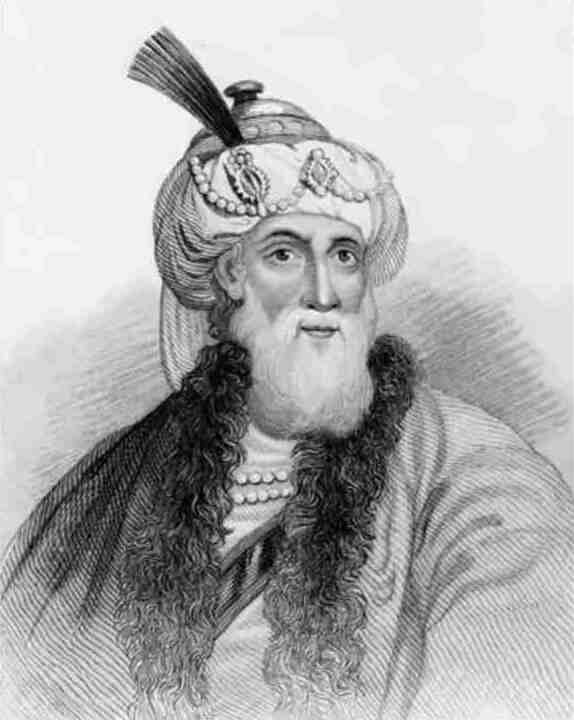
- Fig. 1 · Flavius Josephus: engraved frontispiece from William Whiston’s 1737 translation (imaginary portrait). Wikimedia Commons