Richard Carrier’s Case for Mythicism, Explained and Assessed
Richard Carrier presents the most systematic modern case for Jesus mythicism. This article explains his Bayesian framework, reference class and readings of Paul before assessing their disputed assumptions.
4 sections4 citations1 figure
The short answer: Richard Carrier offers a more explicit and testable mythicist theory than most popular writers. His Bayesian structure is not itself the problem. The dispute lies in the inputs: his reference class, prior probability, readings of Paul and estimates of how likely the evidence would be under competing hypotheses.
What is Carrier’s model?
Carrier compares two broad hypotheses: a minimal historical Jesus and a Jesus first conceived as celestial. He assigns prior odds using a proposed class of mythologised heroes, then updates those odds with evidence from Paul, the Gospels and external sources.[1]
Bayes’s theorem is a valid way to describe historical inference. Writing numbers down, however, does not make contested classifications objective. The conclusion can change substantially when the reference class or likelihood estimates change.
Where is the argument strongest?
Carrier rightly insists that evidence must be compared under both hypotheses. He highlights Paul’s revelations, cosmic language, the literary construction of the Gospels and uncertainty in Josephus. He also provides unusually clear statements of what his hypothesis predicts.
Where do critics disagree?
The largest disputes concern whether the chosen “Rank-Raglan” reference class predicts non-existence, whether “brother of the Lord” means biological kinship,[4] whether “born of a woman” can be relocated to heaven, and whether the Ascension of Isaiah preserves an originally celestial execution.
Gullotta argues that Carrier’s readings repeatedly prefer possible alternatives over the more probable contextual reading.[2] The same problem affects numerical likelihoods: a precise posterior can conceal broad judgement calls made earlier.
Does scholarly rejection settle it?
No. A minority argument must be answered, not dismissed by headcount. Yet reception matters when specialists from different commitments identify the same textual and methodological weaknesses. Carrier’s work deserves direct engagement precisely because it is the strongest developed version of the case.
For focused assessments, see James, Philo, the Ascension of Isaiah and celestial Jesus theories.
Sources and further reading
- Richard Carrier, On the Historicity of Jesus (Sheffield Phoenix, 2014). ↩
- Daniel N. Gullotta, “On Richard Carrier’s Doubts”, JSHJ 15 (2017), 310–346. ↩
- C. Behan McCullagh, The Logic of History (Routledge, 2004).
- Chrissy M. Hansen, “Familial Brother(s) of the Lord?”, Expository Times 136/11 (2025), 483–493. ↩
Figures
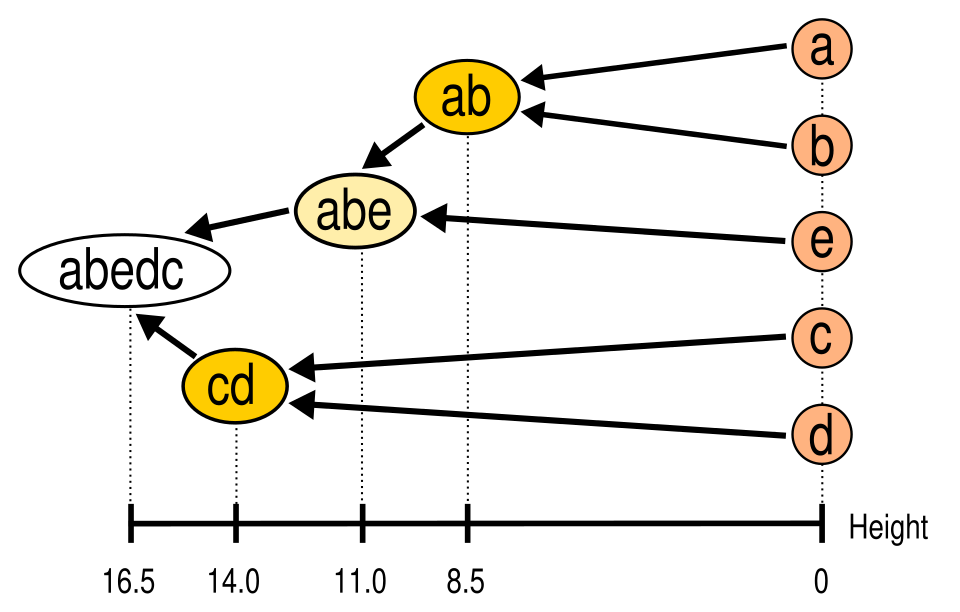
- Fig. 1 · A hierarchical clustering dendrogram: the output format on which the entire stylometric argument rests. Wikimedia Commons