Articles
Independent Anti-Mythicism articles examining the recurring arguments for a mythical Jesus, apart from the page-by-page response to mythicism.web.app.
Independent guides and book reviews, separate from the claim-by-claim responses. Browse by publication type or choose the subject you want to investigate.
27 publications
 Article
 You can judge this (mythicist) book by its AI cover
Christ Before Jesus has the presentation of a revelation. Its historical argument deserves considerably less reverence.
Books & critics Article
 Did Jesus Exist? The Scholarly Consensus
Why historians accept that Jesus existed, what the scholarly consensus does and does not cover, and how the evidence compares with mythicist alternatives.
Historical method Article
 Christ Before Jesus: Claims, Evidence and Critical Reviews
A concise guide to Christ Before Jesus by Matthew Britt and Jaaron Wingo, its second-century thesis, stylometric claims and the methodological objections raised by critics.
Books & critics Article
 Richard Carrier’s Case for Mythicism, Explained and Assessed
Richard Carrier presents the most systematic modern case for Jesus mythicism. This article explains his Bayesian framework, reference class and readings of Paul before assessing their disputed assumptions.
Mythicist theories Article
 Jesus Mythicism: The Strongest Arguments and Their Problems
A fair assessment of the strongest arguments for Jesus mythicism: silence, Paul’s cosmic language, literary Gospels, disputed external sources and ancient parallels.
Mythicist theories Article
 Did Early Critics Say Jesus Never Existed?
Ancient opponents attacked Jesus’s parentage, miracles, character and divinity. Their surviving arguments normally presuppose a human figure rather than alleging that Christians invented him wholesale.
Roman & Jewish witnesses Article
 Was Jesus Originally a Celestial Being?
Paul gives Jesus cosmic significance, but his letters also place him in Jewish human ancestry, give him a brother and locate his death within an earthly movement.
Paul & Jesus's family Article
 Are Paul’s Letters Earlier Than the Gospels?
The undisputed Pauline letters are normally dated to the 50s CE, before the surviving narrative Gospels. Their internal chronology and reception make wholesale second-century dating implausible.
Paul & Jesus's family Article
 Does Tacitus Prove Jesus Existed?
Tacitus is useful hostile corroboration for Jesus’s execution under Pilate and the early Christian movement, but no single late source proves historicity by itself.
Roman & Jewish witnesses Article
 Does Josephus Mention Jesus?
Josephus contains two references to Jesus. One was altered by Christian transmission; the other identifies James as the brother of Jesus called Christ. Their evidential value is not identical.
Roman & Jewish witnesses Article
 Did Paul Meet Jesus’s Brother and Disciples?
Paul says that he met Cephas and James, whom he calls the Lord’s brother, and later names John among the Jerusalem leaders. What does this establish about Jesus and the earliest Christian movement?
Paul & Jesus's family Article
 How Do Historians Decide Whether an Ancient Person Existed?
Historians do not demand modern paperwork from antiquity. They compare dated sources, dependence, provenance, incidental detail, hostile evidence, silence and alternative explanations to decide whether a person best explains the surviving record.
Historical method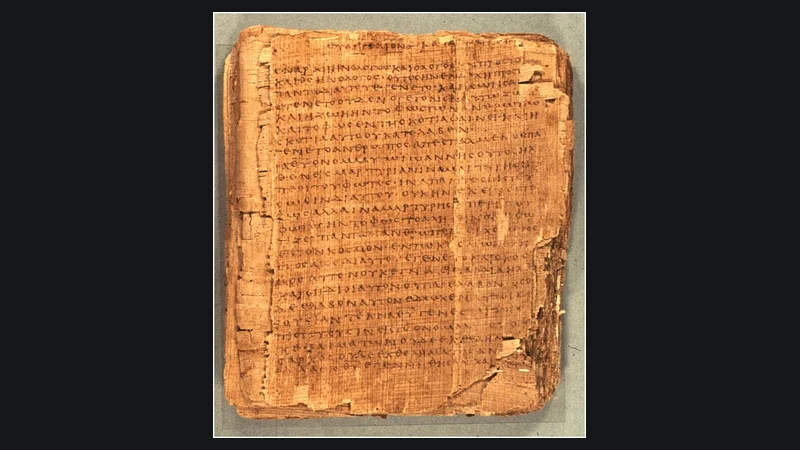 Article
 When Were the Gospels Written?
The Gospels do not carry modern publication dates. Their usual ranges are historical estimates based on literary dependence, the Jewish War, the development of each community and external reception, with genuine disagreement at the edges.
Gospels & origins Article
 What Do Non-Christian Sources Say About Jesus?
Josephus and Tacitus offer the clearest non-Christian references to Jesus. Pliny, Suetonius, Mara bar Serapion, Lucian, Celsus and rabbinic traditions primarily attest the movement or later hostile memories and must not all be counted as equal witnesses.
Roman & Jewish witnesses Article
 Was Christianity Invented in the Second Century?
A second-century invention theory must move Paul's letters, their communities and their reception together. The surviving evidence instead shows a first-century movement developing into the diverse Christianity visible in the second century.
Gospels & origins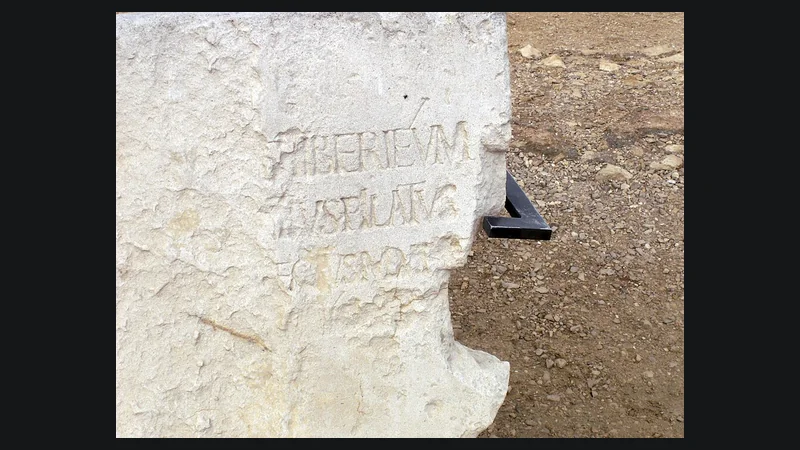 Article
 What Evidence Is There That Jesus Existed?
The historical case for Jesus does not rest on one decisive inscription. It rests on an early and converging record: Paul's letters, people presented as Jesus's family and followers, Gospel traditions, and later Jewish and Roman corroboration.
Historical method Article
 Are the Gospels Myths or Ancient Biographies?
Calling the Gospels ancient biographies does not certify their miracles or accuracy. It identifies the kind of claim they make: narratives organised around the life and death of a recent human subject.
Gospels & origins Article
 Why Are There No Contemporary Records of Jesus?
No surviving author describes Jesus during his lifetime. The question is not whether that gap exists, but whether a rural Galilean preacher executed as a provincial criminal should have entered the tiny surviving literary record.
Historical method Article
 Did Nazareth Exist in the Time of Jesus?
Archaeology identifies a small Jewish settlement at Nazareth in the Early Roman period. That does not prove Jesus lived there, but it removes the claim that the Gospel setting was invented because the village did not exist.
Archaeology Article
 Was Jesus Copied from Dying-and-Rising Gods?
Ancient religions contain dying gods, disappearing gods, revivals and apotheoses. Similarity is real, but the old universal template collapses when each cult is dated and read in its own sources.
Mythicist theories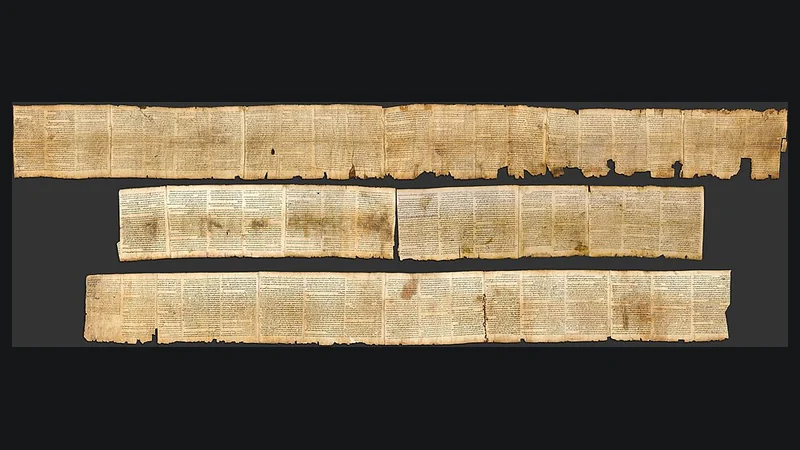 Article
 Did Philo Know a Celestial Jesus?
Philo describes a heavenly Logos and comments on Zechariah’s “Rising” figure, but he never names that figure Jesus. The name belongs to the historical high priest in Zechariah, not to Philo’s Logos.
Mythicist theories Article
 The Ascension of Isaiah and the Celestial Crucifixion
The Ascension of Isaiah is a composite Christian apocalypse with a complicated textual history. It witnesses imaginative heavenly Christology, but its surviving forms repeatedly place Jesus’s birth, disciples, crucifixion and burial on earth.
Mythicist theories Article
 Who Were the “Rulers of This Age”?
The rulers in 1 Corinthians 2:8 may be human authorities, cosmic powers, or both. None of those readings says that the crucifixion occurred in outer space.
Paul & Jesus's family Article
 “Born of a Woman” and “Seed of David”
Galatians 4:4 and Romans 1:3 use ordinary language for human birth, Jewish identity and descent. Their theological setting does not turn the woman or Davidic ancestry into locations in heaven.
Paul & Jesus's family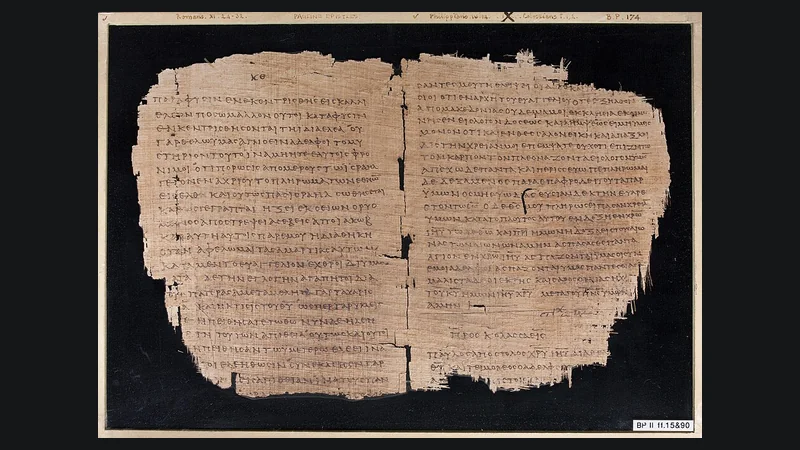 Article
 James, the Brother of the Lord
Galatians 1:19 is not an isolated slogan. Paul also distinguishes “the brothers of the Lord” from other apostles, while Josephus identifies James by the same family relationship.
Paul & Jesus's familyArticle What Did Paul Know About Jesus?
Paul never writes a life of Jesus, but his undisputed letters still place Jesus in a Jewish family, under the law, descended from David, teaching, eating a final meal, being crucified and leaving a brother Paul personally met.
Paul & Jesus's familyBook reviewChrist Before Jesus
The book behind the source site, measured against its own thesis. An instrument that cannot produce the conclusion, data that points the other way, a central piece of the argument retracted by its own author, and a reception in which nobody who examined the method endorsed the result – mythicists included.
Books & criticsNo items have been added to this section yet.
For external books and scholarship, continue to the Resources for the Historicity of Jesus.