Josephus
The Testimonium has been tampered with – conceded, loudly, along with much of this page's evidence for that. The James passage is a different text with different evidence, and the "son of Damneus" reading fails at the exact point it needs to succeed.
Responding to mythicism.web.app/josephus
Josephus mentions Jesus twice: the famous Testimonium Flavianum (Antiquities 18.63–64) and the notice of James's execution (Antiquities 20.200). The source page treats them as one problem. They are two very different problems, and being honest about the first is what earns the right to be firm about the second.
Up front, the concessions – because they are large. The Testimonium as it stands cannot be what Josephus wrote: no non-Christian says "He was the Christ" and "he appeared to them alive again the third day." Some or all of it is Christian interpolation; that has been the critical consensus for well over a century. The page's supporting observations are also substantially right: Origen twice says Josephus did not accept Jesus as Christ, which is incompatible with the received text; no Christian author before Eusebius quotes the passage; and Ken Olson's case that the Testimonium's vocabulary matches Eusebius better than Josephus is serious scholarship, seriously debated. None of this needs resisting. The question is what remains when the surgery is done – and what any of it has to do with the other passage.
"The Testimonium Flavianum is an interpolation by Eusebius"
Mythicist claim: Book 18.3.3 is an interpolation by Eusebius. Phrasing unique to Eusebius appears in it ("doer of wonderful works" — poiētēs meaning "doer" rather than "poet"). Eusebius is the first to quote it. Christian authors before 324 who knew Josephus never mention it. Feldman notes a 5th–6th century table of contents omits it. Carrier lists Feldman, Goldberg, Hopper, Olson and Whealey as supporting Eusebian creation.
The genuine dispute here is not whether the text has been Christianised – everyone competent agrees it has – but whether the interpolation is total (Eusebius composed the whole paragraph) or partial (Josephus wrote a short, neutral notice that Christian scribes embellished). The page presents the total-interpolation position as settled. It is one side of a live argument, and presenting the roster honestly matters:
- For total interpolation or heavy scepticism: Ken Olson (the Eusebian-vocabulary argument), Paul Hopper (narrative-grammar analysis), Richard Carrier, and – the strongest recent statement – Ivan Prchlík; with older antecedents back to the nineteenth century.
- For an authentic core, Christianised: John P. Meier's reconstruction (strip "if it be lawful to call him a man," "He was the Christ," and the resurrection sentence; a coherent, dry, Josephan notice remains), Geza Vermes, Louis Feldman (who catalogued the debate for decades and accepted a core while flagging every problem the page lists), James D. G. Dunn, Graham Stanton, Serge Bardet, and the majority of Josephus specialists.
- Misfiled by the page: Alice Whealey does not support Eusebian creation. Her monograph on the Testimonium's reception history argues the opposite – that a version without "He was the Christ" (reflected in Jerome's Latin and the Syriac tradition behind Agapius's Arabic, which the page itself quotes: "he was perhaps the Messiah") points to an authentic Josephan text that lacked the confessional claims. The page's own Arabic-version evidence is the partial-interpolation position's evidence.
Where does that leave things? This site takes no position stronger than the evidence: the Testimonium is compromised, its reconstruction is disputed, and nothing on this site rests on it. Treat it as a total loss if you like. The historical case for Jesus was never "Josephus 18.63 says so"; among specialists it is a corroborating footnote at most. The load-bearing passage is the next one – which is why the page works so hard to take it down with the same brush, and why the brush doesn't reach.
Now there was about this time Jesus, a wise man, if it be lawful to call him a man, for he was a doer of wonderful works, a teacher of such men as receive the truth with pleasure. He drew over to him both many of the Jews and many of the Gentiles. He was the Christ. And when Pilate, at the suggestion of the principal men amongst us, had condemned him to the cross, those that loved him at the first did not forsake him, for he appeared to them alive again the third day, as the divine prophets had foretold these and ten thousand other wonderful things concerning him. And the tribe of Christians, so named from him, are not extinct at this day.
flagged across scholarship as Christian insertionsthe residue debated between the partial and total positions

"In 20.200, 'Jesus who was called Christ' is really Jesus son of Damneus"
Mythicist claim: The passage "brought before them the brother of Jesus who was called Christ, whose name was James" makes no sense as a reference to a Jesus dead for thirty years. Josephus often references people through familial relationships, but we have no examples of him introducing someone by a long-dead relative who has not been introduced previously, is not famous, or is not part of a dynasty or royalty. High priests were anointed, so Jesus son of Damneus — made high priest at the passage's end — could be the "Christ." But Origen's remarks make the title's presence unlikely: he laments that Josephus didn't accept Christ, which would be absurd if Josephus used the title.
Mythicism needs this argument to work, so take it slowly. In the interval between governors in 62 CE, the high priest Ananus convenes a court and executes "the brother of Jesus who was called Christ (ton adelphon Iēsou tou legomenou Christou), James by name, and some others." Citizens protest; Ananus is deposed; Jesus son of Damneus gets the high priesthood.
The "called Christ" phrase is exactly how Josephus disambiguates. The page asks why Josephus would identify James by a dead brother. Because Josephus's Judaea is full of men named Jesus and James – the page's own "A popular name" section makes this point – and Josephus routinely tags individuals by their best-known relative or epithet, dead or alive. The tag tou legomenou Christou, "the one called Christ," is not a confession (Origen's point survives: legomenos – "so-called" – is precisely how a non-believer writes it); it is a distinguishing label for a figure whose movement, Josephus knows, is still around and still named after that label. It presumes readers have heard "Christos" attached to one particular Jesus – which, writing in Rome in the 90s, two decades after Nero's persecution made Christians notorious there, they had.
The sharpened version of the rule answers itself. The page now states the principle carefully: Josephus does not identify a man by a long-dead relative unless that relative was previously introduced, famous, or dynastic. Grant the rule exactly as written. It contains its own exception, and this passage falls inside it.
The whole force of tou legomenou Christou is that it is a fame-tag. Josephus is writing in Rome in the 90s for a Roman readership, three decades after Nero used Christians as public scapegoats and made the name notorious in that city (Tacitus). "The one called Christ" works as a disambiguator precisely because the label had travelled, attached to one particular Jesus, and was still attached to a movement his readers had heard of. A tag nobody recognises identifies nobody; the page's argument requires "Christos" to have been simultaneously meaningless to Josephus's audience and worth writing down.
There is also a quieter problem with the rule as a test. Josephus names dozens of otherwise obscure men by relation, and the criterion carries three escape clauses, which between them cover most of the cases that could refute it. A principle that can only be tested after the exceptions have been fitted around the data is not doing evidential work. The straightforward reading remains the one the field overwhelmingly takes: an aside identifying an executed man by the brother whose title the reader will recognise.
The son-of-Damneus reading breaks on its own logic. For "Jesus who was called Christ" to mean Jesus son of Damneus, Josephus must call the same man by two different tags in one paragraph – "called Christ" at the top, "son of Damneus" at the bottom – which defeats the entire purpose of tagging, and does so in the most confusing possible way: reusing the standard disambiguator for a different Jesus than the one it elsewhere marks. Worse: no high priest is ever called "Christos" as a personal tag anywhere in Josephus's twenty volumes of high-priest history, including this very chapter, where anointing vocabulary never appears. And the theory requires the priestly aristocrat Ananus to have judicially murdered the brother of the man about to succeed him – with Josephus, the connoisseur of priestly feuds, narrating this delicious vendetta without a word marking the connection.
On the vocabulary argument now added to the page. It is also urged that Josephus elsewhere uses poiētēs only to mean "poet," so the Testimonium's "doer (poiētēs) of wonderful works" is un-Josephan. This is a real observation, it belongs to Ken Olson's case, and this site does not resist it: it is evidence for the interpolation of that phrase, which the partial-interpolation position already grants. It bears on the Testimonium's wording, not on 20.200, whose vocabulary nobody disputes and whose phrasing (legomenou) is the opposite of Christian.
Origen confirms the phrase rather than undermining it. Origen – a century before Eusebius – three times attributes to Josephus a statement about "James the brother of Jesus who was called Christ" (Commentary on Matthew 10.17; Contra Celsum 1.47, 2.13), using the same tou legomenou Christou formula, while complaining that Josephus did not believe. Origen has garbled something – he says Josephus blamed Jerusalem's fall on James's death, which our text doesn't say – but garbling requires a source: what Origen demonstrably read in his Josephus, pre-Eusebius, was a James identified as the brother of the so-called Christ. The page uses Origen to attack the Testimonium (rightly) and must then explain away Origen's triple attestation here. It cannot have him both ways.
The field's verdict on 20.200 is therefore lopsided in a way its verdict on the Testimonium is not. Feldman's survey of the literature found overwhelming acceptance, and scholars with no theological stake affirm the passage precisely because legomenos is so un-Christian a way to name the founder. Then comes the convergence: Josephus's James, executed in 62, is the same "James the brother of the Lord" Paul says he met in Jerusalem (Gal 1:19) a generation earlier. Two independent sources, one Christian and one not, agree that Jesus had a brother named James who led in Jerusalem and died there. Mythicism has to dissolve that fact twice.
"Hegesippus's James dies differently, and the Jameses are confused anyway"
Mythicist claim: James son of Damneus in 20.9.1 doesn't face the same death as James the Just — Hegesippus has him thrown from the temple, stoned, and clubbed, just before Vespasian's siege (67–69), while Josephus's account is around 61 CE. There's long-standing debate over which James is which; pseudo-Hippolytus lists three.
Correct that the accounts diverge – and instructive to watch how. Josephus, writing closest to events, gives a sober judicial stoning in 62 with political fallout. Hegesippus, a century later, gives a theatrical martyrdom – temple pinnacle, fuller's club, portent of the siege. That is legend growing on a historical kernel in the normal direction: the later the source, the taller the tale, with the dry early version explaining the ornate late one and not vice versa. Critical scholarship has always preferred Josephus here and treated Hegesippus as embellishment – another instance of the pattern this site keeps meeting, where the tools that flag legendary growth are the same tools that isolate the historical bedrock underneath it.
The confusion among Jameses in later tradition (the Just, the Lesser, son of Alphaeus, pseudo-Hippolytus's lists) is likewise real and likewise late – church writers harmonising too many Jameses across too few slots. None of it reaches back to touch the two earliest, independent data points, which are unconfused: Paul in the 50s knows James the brother of the Lord as a Jerusalem pillar; Josephus knows the brother of the so-called Christ, James, executed in 62. Later Christians muddling their prosopography does not un-write the two first-century sources that agree.
And the page's John 7:5 point – "his brothers didn't believe in him" – again corroborates rather than rebuts: sceptical brothers who later lead the movement (Paul, Josephus, Acts, and 1 Cor 15:7's appearance to James all presuppose the leadership) is an embarrassment-shaped datum. Traditions do not invent unbelieving families for their invented founders and then promote one of the unbelievers to run the mother church.
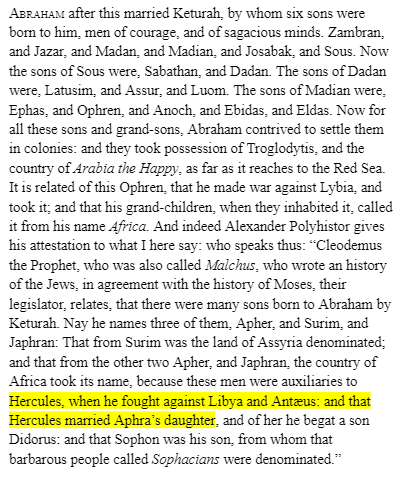
"Josephus reports Hercules too — he writes what people believe"
Mythicist claim: Josephus mentions Hercules and Antaeus (Antiquities 1.15). He is writing the history of what people believe, not necessarily an account free of embellishment or myth. Temples and followers of Hercules aren't direct evidence Hercules existed.
The principle is sound; the application misses where the two passages sit. When Josephus touches Greek myth in Antiquities 1 he is doing comparative chronography – synchronising Genesis-era material with gentile tradition, at a legendary remove of many centuries, and he frames it as what the Greeks relate. Antiquities 20 is a different genre altogether: it is Josephus's contemporary political history – governors, high-priestly successions, a judicial proceeding datable to the month, involving men (Ananus, Albinus, Agrippa II) Josephus knew personally or by one remove, in a city where he lived, within his own lifetime. The James notice is embedded in exactly the material historians trust Josephus most on, and the Hercules material in exactly the material nobody trusts anyone on. "He records myths in book 1" no more infects book 20 than Livy's Romulus infects Livy on the Second Punic War.
The temples-don't-prove-Hercules analogy fails on distance: Hercules-cult is a thousand years and a legendary genre away from its supposed referent; Josephus on James is one generation and a court record's genre away from his. The right analogy for "the brother of the so-called Christ" is not Hercules but the other contemporary figures Josephus names in passing – John the Baptist (Ant. 18.116–119, near-universally accepted), Ananus, Theudas – none of whom anyone doubts on the ground that book 1 mentions Antaeus.
"Josephus was born in 37 — not a contemporary. And Joseph bar Matthias resembles Joseph of Arimathea"
Mythicist claim: Born in 37 CE, Josephus was not contemporary. He never mentions Popes or apostolic succession despite living in Rome. His name — Joseph bar Matthias — is similar to Joseph of Arimathea, a location with no external evidence. In his Life, he had three crucified friends taken down, and one survived with medical care.
On contemporaneity: Josephus was not a contemporary of Jesus; he was a contemporary of James, nine years old and living in Jerusalem's priestly circles when James was executed there – for the passage that matters, he is about as close as ancient testimony gets. On popes: see the Tacitus response – Rome had no monarchical bishop for Josephus to mention, so the silence matches the history. On the crucifixion-survival anecdote: genuine, and cherished by historians as evidence of what crucifixion was – note that even with Titus's personal intervention and the best Roman physicians, two of three victims died.
The Arimathea word-play deserves a direct answer because it is a favourite elsewhere too: the resemblance between "bar Matthias" and "Arimathea" is coincidence of the kind ancient onomastics mass-produces (Joseph and Matthias being among the commonest Judaean names), and the conjecture requires Mark – writing before or around the time Antiquities was even published – to have built a character from a pun on the patronymic of a historian whose Jesus material did not yet exist. Chronology alone kills it. As for Arimathea the place: it is usually identified with Ramathaim (the LXX's Armathaim, Samuel's hometown, 1 Sam 1:1), and small Judaean villages lacking "external evidence" is the normal condition of small Judaean villages – see Nazareth, whose first-century existence archaeology has in fact confirmed.
Full bibliography
- Josephus, Antiquities 18.63–64; 18.116–119; 20.197–203; Life 5, 420–421.
- Louis H. Feldman, Josephus and Modern Scholarship (1937–1980) (Berlin: De Gruyter, 1984).
- John P. Meier, A Marginal Jew, vols. 1–2 (New York: Doubleday, 1991–94).
- Alice Whealey, Josephus on Jesus (New York: Peter Lang, 2003); "The Testimonium Flavianum in Syriac and Arabic," NTS 54 (2008), 573–590.
- Ken Olson, "Eusebius and the Testimonium Flavianum," CBQ 61 (1999), 305–322.
- Shlomo Pines, An Arabic Version of the Testimonium Flavianum and its Implications (Jerusalem: Israel Academy, 1971).
- John Painter, Just James: The Brother of Jesus in History and Tradition (Minneapolis: Fortress, 2004).
- Richard Bauckham, Jude and the Relatives of Jesus in the Early Church (Edinburgh: T&T Clark, 1990).
- Steve Mason, Josephus and the New Testament, 2nd ed. (Peabody: Hendrickson, 2003).
- Daniel Gullotta, "On Richard Carrier's Doubts," JSHJ 15 (2017), 310–346.
- Origen, Contra Celsum 1.47; 2.13; Commentary on Matthew 10.17.
- Hegesippus apud Eusebius, Church History 2.23.
Figures
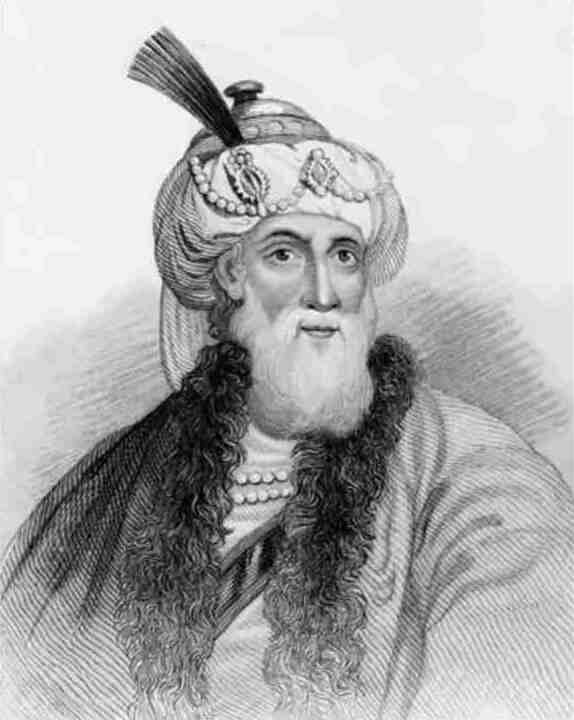
- Fig. 1 · Flavius Josephus: engraved frontispiece from William Whiston’s 1737 translation (imaginary portrait). Wikimedia Commons
- Fig. 2 · The source site’s own list of men named Jesus in Josephus – the disambiguation problem that "called Christ" exists to solve. mythicism.web.app
- Fig. 3 · The Hercules passage as displayed on the source site – comparative mythography from Antiquities book 1, eighteen books from the James notice. mythicism.web.app