Did Jesus Exist? The Scholarly Consensus
Why historians accept that Jesus existed, what the scholarly consensus does and does not cover, and how the evidence compares with mythicist alternatives.
9 sections12 citations1 figure
Yes. The overwhelming mainstream position among specialists in early Christianity is that Jesus of Nazareth was a historical person. That agreement does not extend to every Gospel episode, still less to the truth of Christian theology. It concerns a first-century Jewish figure whose life and death preceded the movement that proclaimed him risen.[1][2][3]
This distinction is the place to start. Saying that Jesus existed does not settle whether he was divine. Saying that a Gospel contains invented scenes does not settle whether its principal subject was invented. An argument about one question cannot quietly be cashed in as an answer to the other.
The useful question is why specialists find a historical Jesus the better explanation of the surviving evidence. A list of professors, however distinguished, cannot do that work for us.
What does the consensus actually cover?
The broad historical outline is comparatively modest: Jesus belonged to the Jewish world of the early Roman Empire, attracted followers, and was executed by crucifixion under Pontius Pilate. Accounts of his teaching and activity then circulated within a movement that understood his death through scripture and proclaimed his resurrection. Scholars can accept that outline while disagreeing sharply about its details and religious significance.[2][3]
It helps to separate three levels of claim:
- Existence and broad setting: a historical Jewish Jesus, followed by an early movement devoted to him. This is the mainstream starting point.
- Reconstruction of his life: what he expected, which sayings preserve his teaching, how he understood himself, and the precise events leading to his death. These require separate arguments.
- Theological conclusions: incarnation, the divine purpose of his death, and the truth of resurrection faith. Agreement on existence does not establish these claims.
Even within the first two levels, confidence varies. We should not present an exact birth year, a verbatim trial transcript and Roman crucifixion as though they enjoyed identical support. Helen Bond's survey is useful precisely because it introduces the sources and competing reconstructions rather than offering a single settled biography.[2]
How do we know there is a consensus?
There is no percentage to report here. We are not citing a representative survey of every ancient historian, and numbers such as “99.9 per cent” imply a measurement that has not been supplied.
The more defensible description comes from specialist assessments and the shape of the literature. Bart Ehrman explicitly describes the agreement as extremely broad while acknowledging a small number of trained dissenters. His account also distinguishes expert agreement from proof. Both points matter.[1]
A recent companion chapter by Sarah E. Rollens and Anthony Le Donne identifies active research disputes over authenticity criteria, the proposed sayings source Q, and the value of noncanonical writings. Its public abstract maps arguments about how to reconstruct Jesus from the sources. It does not describe an evenly divided field over whether there was a person to reconstruct.[4] That is an illustration of the field's priorities, not a statistical survey of its members.
“Consensus” therefore names a strong convergence in specialist judgment. It neither means every qualified scholar agrees nor gives the majority permanent ownership of the answer. Its weight depends on the evidence and reasoning that sustain it.
Why do historians begin with Paul?
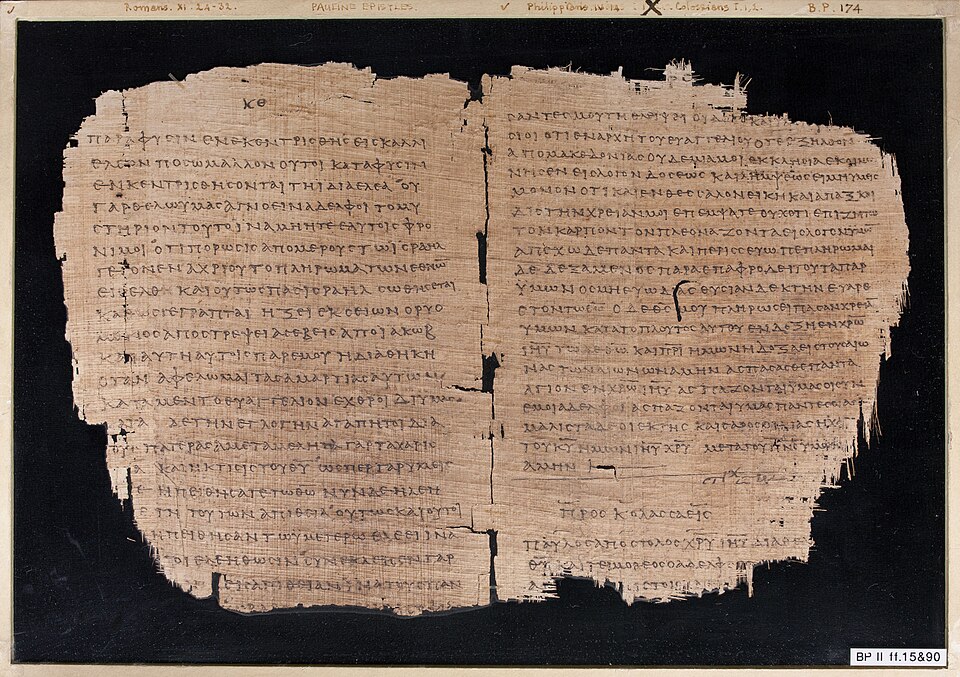
The case should begin with early evidence, not with a parade of late writers repeating Christian traditions. Paul's undisputed letters precede the narrative Gospels. They are arguments and correspondence, not a life of Jesus. Their incidental references nevertheless matter.
In Galatians 1:18–19, Paul describes a visit to Cephas and identifies another person he met as “James, the Lord's brother”. The passage places Paul in contact with named people in the earlier movement. It does not make him an eyewitness to Jesus's ministry.[5] The ordinary familial reading of James's description is one reason the passage has such force. Our article on James examines the alternative suggestion that this was merely a religious title.
In 1 Corinthians 15:3–8, Paul passes on a tradition about Jesus's death, burial, resurrection and appearances. A historian need not accept the resurrection claim to recognise evidence of an early community proclaiming a dead and risen Jesus.[6] The passage establishes what Paul transmits; it does not, by itself, prove each event he reports.
These two texts present a problem for a theory of complete invention. The theory must explain the relationship between Paul's named contacts, his language about James, and the traditions already circulating before his letter. It cannot finish the argument by pointing out that Paul also claims revelations.
That is our assessment of the passages, not a claim that each phrase is incapable of another interpretation. Read what Paul knew about Jesus for the wider dossier, including its limitations. No single letter supplies a full biography. The historical case does not need one.
Can historians use the Gospels without believing them?
Yes. Historians can investigate a religious text without treating it as either revelation or worthless fiction. The questions concern its date, purpose, sources, literary relationships and particular claims.
The Gospels' dependence on earlier material is a reason to avoid counting repeated stories as separate witnesses. Four versions do not automatically provide four independent attestations. Literary shaping also matters: Paula Fredriksen and John Dominic Crossan discuss the use of scriptural language in the passion narratives in their published interviews. An account can interpret a death through scripture without preserving the exact words or sequence of the event.[3]
The opposite shortcut is equally poor. Finding a scriptural model for a scene does not establish that every person in the narrative is fictional. It tells us something about the author's presentation. How much historical information survives beneath that presentation remains a further question.
James D. G. Dunn's Jesus Remembered represents an influential attempt to approach the traditions through oral transmission and memory.[7] That approach itself can be debated. We do not need to settle every argument about memory, Q or an individual saying before asking whether a historical person best explains the movement's beginnings.
Our guides to the Gospels as ancient biography and when they were written take these questions separately. Neither genre nor date is a certificate of accuracy.
What do Josephus and Tacitus contribute?
They contribute later evidence outside Christian scripture. They are not contemporary eyewitnesses to Jesus's ministry, and their value should not be exaggerated to make the case look easier than it is.
In Antiquities 20.200, Josephus identifies James through his relationship to Jesus, who was called Christ. This is a separate passage from the longer, textually disputed notice about Jesus in Book 18.[8] The distinction matters: objections to the wording of the longer passage cannot simply be transferred to the James passage without an argument. Our Josephus guide examines both.
Tacitus, in Annals 15.44, reports that Christus suffered capital punishment under Pontius Pilate during Tiberius's reign. He writes much later and does not identify the source of this particular information.[9] It would be careless to turn that silence into a confident claim that he consulted Jesus's official execution file. See what Tacitus does and does not establish.
The question is how these notices fit with the earlier evidence, not whether either passage can carry the entire case alone. Robert Van Voorst's survey provides a route into the different Roman, Jewish and other noncanonical sources.[10] A reader may discount some of that material and still have to account for Paul and the early movement.
What do scholars disagree about?
Quite a lot. The extent to which individual sayings can be recovered, the relationship among the Gospel sources, the value of particular tests of authenticity, and the historical usefulness of texts outside the canon are all live questions.[4] Scholars also offer different accounts of Jesus's aims and the circumstances of his execution.[2][3]
Those disagreements are a warning against presenting one's preferred reconstruction as the settled historical Jesus. E. P. Sanders's The Historical Figure of Jesus is a useful entry into an approach that places Jesus within his Jewish setting and distinguishes degrees of historical confidence.[11] It belongs alongside other reconstructions, not in place of them.
The logical point is simple. Uncertainty about a person's intentions does not entail uncertainty of the same degree about that person's existence. Nor does disagreement over one saying erase evidence from a letter discussing a named relative. Each conclusion has to be tested against the evidence relevant to it.
For the same reason, an advocate of historicity should concede weak arguments. A late legend does not become good evidence because it supports a conclusion we already accept. Our guide to historical method explains why weighing evidence is more useful than collecting the largest pile of favourable references.
Is the consensus just Christian bias?
Religious commitments can influence scholarship. So can hostility to religion, professional incentives and attachment to a favourite theory. The appropriate response is to scrutinise arguments, disclose relevant constraints and compare work whose conclusions do not depend on the same commitments.
Ehrman, for example, identifies himself as agnostic while defending Jesus's existence.[1] His position is enough to disprove the suggestion that accepting a historical Jesus necessarily expresses Christian faith. It does not make all his historical arguments correct. Nonbelief is no more a substitute for evidence than belief is.
One practical test is to ask what a historical argument requires the reader to grant. Reading Paul's report of meeting James does not require belief in inspiration. Investigating Tacitus does not require accepting a Christian creed. Concluding that people proclaimed a resurrection does not require concluding that God raised someone from the dead.
This is why the historical question can be shared by readers with very different religious views. If the objection concerns the particular employment and institutional claims at mythicism.web.app, our original scholarly-consensus response addresses those directly. The present article asks the wider question.
Are there qualified scholars who disagree?
Yes. It is a mistake to claim that no trained scholar has defended mythicism or argued for greater uncertainty. Richard Carrier presents a version in which an initially revealed, celestial Christ acquired an earthly biography later. His own account also rejects several popular conspiracy and astrotheological approaches.[12] Answering the weakest internet parallel is therefore not enough to answer his position.
The dispute turns on whether that reconstruction explains the earliest texts better than a historical Jesus does. Our assessment is that it does not: Paul's familial language and contact with the earlier movement remain significant obstacles. But those readings have to be defended, not insulated by announcing Carrier's minority status. Our assessment of Carrier and guide to the strongest mythicist arguments discuss the alternatives more fully.
A dissenting book makes the existence of dissent undeniable. It does not establish that opinion in the field is evenly divided. Conversely, being in the minority does not make an argument false. Both sides still owe the reader an explanation of the evidence.
Where should a newcomer begin?
Begin with the small body of early material, then expand outwards. Read Paul's account of meeting Cephas and James. Ask what it says, what it leaves unstated, and what each proposed interpretation requires. Then consider the Gospel traditions and the later outside references without pretending they are all independent or equally early.
For a shorter route through the whole case, read the evidence that Jesus existed. For the common objection about missing lifetime documentation, see no contemporary records. The resource library offers books, papers and primary texts beyond this site.
The consensus is a sensible starting point because it records a broad specialist judgment. The reasons for that judgment are what deserve attention. You should be able to follow them to a text, examine the qualifications, and understand why a competing explanation does or does not work. You do not have to become a Christian to do any of that.
Sources and further reading
The ancient passages and public essays or interviews linked below can be read directly. Book links lead to publisher records and descriptions unless stated otherwise; they are reading recommendations, not claims of unrestricted full-text access. The Cambridge chapter's public abstract is used only to identify the research debates it lists.
- Bart D. Ehrman, “My Book ‘Did Jesus Exist’ (an answer to the mythicists)” (24 September 2024). Public author essay reproducing his discussion of the question, specialist agreement and dissent. ↩ ↩2 ↩3
- Helen K. Bond, The Historical Jesus: A Guide for the Perplexed (T&T Clark, 2012). Publisher description and contents; an introduction to the sources and competing reconstructions. ↩ ↩2 ↩3 ↩4
- Paula Fredriksen, Shaye J. D. Cohen, John Dominic Crossan and other interviewees, From Jesus to Christ: The First Christians, programme transcript, Part 1 (PBS FRONTLINE, 1998). See the scholars' discussions of Jesus's Jewish setting, Roman crucifixion and the scriptural shaping of the narratives. ↩ ↩2 ↩3 ↩4
- Sarah E. Rollens and Anthony Le Donne, “The Historical Jesus”, in Patrick Gray (ed.), The Cambridge Companion to the New Testament (Cambridge University Press, 2021), 50–72. Public abstract; full chapter requires access. DOI: 10.1017/9781108528856.005. ↩ ↩2
- Paul, Galatians 1:18–19. Primary text, NRSV Updated Edition. ↩
- Paul, 1 Corinthians 15:3–8. Primary text, NRSV Updated Edition. ↩
- James D. G. Dunn, Jesus Remembered: Christianity in the Making, vol. 1 (Eerdmans, 2003; linked paperback edition, 2019). Publisher description of the book's focus on oral tradition and memory. ↩
- Josephus, Antiquities 20.200, in Book 20, chapter 9, section 1. Public-domain translation by William Whiston. ↩
- Tacitus, Annals 15.44. Translation by John Jackson, hosted by LacusCurtius at the University of Chicago. ↩
- Robert E. Van Voorst, Jesus Outside the New Testament: An Introduction to the Ancient Evidence (Eerdmans, 2000). Publisher record; a specialist survey for further reading. ↩
- E. P. Sanders, The Historical Figure of Jesus (linked Penguin edition, 1996). Publisher description and bibliographic record. ↩
- Richard Carrier, “Historicity Big and Small: How Historians Try to Rescue Jesus”. Public presentation of his own position and criticisms of arguments for historicity. Cited as a dissenting argument, not as a neutral account of the field. ↩
Figures
- Fig. 1 · A bifolio of Papyrus 46, copied around 200 CE. These leaves contain parts of Romans, Philippians and Colossians, not the Galatians passage discussed above. This is a surviving copy, not Paul's autograph or a document from Jesus's lifetime. Chester Beatty, via Wikimedia Commons; public domain. Wikimedia Commons