Did Early Critics Say Jesus Never Existed?
Ancient opponents attacked Jesus’s parentage, miracles, character and divinity. Their surviving arguments normally presuppose a human figure rather than alleging that Christians invented him wholesale.
4 sections4 citations1 figure
The short answer: no surviving early critic clearly develops the modern claim that Jesus never existed. Celsus, Porphyry, Hierocles and Julian dispute Christian claims fiercely, while Trypho questions whether the Christ has appeared. Their attacks normally presuppose a human Jesus and reinterpret him as illegitimate, deceptive, mistaken or unimpressive.
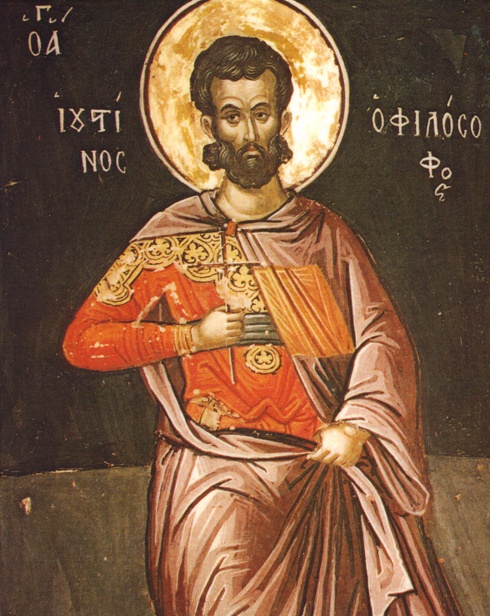
What did Trypho mean by saying the Christ was unknown?
In Justin’s Dialogue, Trypho says that even if the Messiah has been born, he remains unknown until Elijah anoints him.[1] This is a Jewish objection to Justin’s identification of Jesus as Messiah, not an allegation that the recent man was fictional. The dialogue’s literary construction also prevents treating every line as a transcript.
What was Celsus’s attack?
Celsus alleges that Jesus was the son of a soldier, learned magical arts and exaggerated his status.[2] These are polemical counter-stories, not reliable biography. Yet their form matters: Celsus attacks Christian interpretation by degrading Jesus’s origins and deeds, not by exposing an invented person.
What about later pagan critics?
Porphyry attacked prophecy, Gospel inconsistencies and apostolic interpretation. Hierocles compared Jesus unfavourably with Apollonius.[3] Julian argued that Christians misunderstood Jewish scripture and elevated Jesus improperly. Their surviving works are fragmentary and often preserved by Christian opponents, so arguments from silence must remain cautious.
Does their failure to allege non-existence prove historicity?
No. Opponents choose arguments for many reasons, and lost works may have contained other claims. The evidence is contextual: wholesale invention was not a prominent surviving ancient explanation even among writers motivated to discredit Christianity.
Read the detailed pages on Celsus and Justin’s Trypho.
Sources and further reading
- Justin Martyr, Dialogue with Trypho, especially chapters 8 and 49. ↩
- Origen, Against Celsus, especially 1.28–32. ↩
- Robert E. Van Voorst, Jesus Outside the New Testament (Eerdmans, 2000). ↩
- Graham Stanton, Jesus and Gospel (Cambridge University Press, 2004).
Figures
- Fig. 1 · Justin Martyr by Theophanes the Cretan (16th century), an imagined portrait. Wikimedia Commons